Sunday, August 22, 2010
A few words with tUnE-yArDs

Merrill Garbus' tUnE-yArDs project was one of the late, great musical surprises of my 2009. Sean over at Said The Gramophone included Hatari on the Gramophone's best of the year compilation and I was well and truly knocked out by its adept mix of ragged DIY garage rock, African vocal flourishes reminiscent of Letta Mbulu or Dorothy Masuka and respect for melody. A close listening to the excellent BiRd-BrAiNs LP followed and the album has stayed on heavy repeat in my home for over nine months now.
Immediately following a live NY performance, Merrill was kind enough to speak with The Tofu Hut for a few minutes. Here's some of the high points of that conversation.
[NB: This transcription has been edited for clarity, with an eye toward maintaining meaning. Errors should be traced back to your humble narrator, not Ms. Garbus.]
Tofu - Where did the tUnE-yArDs name and the funky upper/lower case spelling come from?
Merrill - The name came from an early song of mine where I describe a "tune-yard" as a place where I can go and harvest my music, to pluck it from the ground. I like to think of songs as living independently of me; instead of having to feel the pressure of creating something solely from my own experiences, I can go and cultivate the finished product from the tune yards. My work is to manifest songs somehow, rather than make them from scratch.
The capitalization was just to draw peoples' eyes on MySpace, back when that's where my music was. It was an attention-getting device and also a way of making people have to slow down when they wrote about me; every time they typed my name they had to really think about what they were doing. I like being a little abrasive and sticking in people's teeth that way. [Laughs] And there's certainly many people, many writers, that have expressed their annoyance at that choice! But you know, I have never actively enforced that capitalization. It's not in my contract or anything.
Tofu - Do you have any regrets? If you could go back and give yourself another alias, would you?
Merrill - No, I really like my name now. It's big enough to encompass a lot, which is what I hoped it could be.
Tofu - What's your background with African music?
Merrill - I spent time in Kenya studying music abroad with an emphasis on taarab, one of the predominant African East coast styles. I was playing violin at the time so I met and played with taarab musicians and poets in Africa, trying to better understand and explore the culture. I also learned the basics of the Swahili language. Exposure to both sounds and pattern of a different tongue and a different style of composition absolutely affected the music I'm doing now.
When I visited Tanzania, I got turned on to the famous Tanzanian musician Hukwe Zawose. Zawose was a huge influence on me in terms of how he used his voice to bring himself and the audience to a different place, a spiritual plane. He used sound to mold a different reality.
More recently, I've been listening to pygmy music from Central Africa. I had been unknowingly emulating some of their sound in Hatari. When I was first recording that song, I had jost lost my voice from overuse so when I hit the high notes, I couldn't do a smooth scale up and had to kind of yodel to reach. While I was flipping my voice like that, a friend said to me "that sounds like pygmy music" so I hunted down some recordings to compare and I really loved what I heard. Since then, I've been training my voice in that style.
African music is absolutely important to me and I know that shows in my music. I'm intrigued by rhythms and melodies that aren't Western, that stretch my capability to understand and follow. A lot of that pygmy music, just for example, I can't comprehend what's going on musically or in the minds of the singers but it's so tremendously compelling.
Tofu - I hear that African grounding in your music; the lyrics are in English, but the phrasing is not.
Merrill - Yeah, I like fucking with language! Whatever makes a thing awkward or imperfect in a traditional Western classical sense, I love being able to do that, to bend the sound and to be unpredictable.
Tofu - How does that feed into your visual aesthetics?
Merrill - You mean the face paint?
Tofu - It seems somewhere between Kabuki theater and tribal markings.
Merrill - It's a little of both really! When I play in a group, the band makes themselves up so there's certainly an element of shared community in that. Again, it's about putting the audience and me in a different reality. But the fact is that I like face paint! I like dressing up for a show! I come from a theater background, so it felt like the natural thing to do to mark the performance mask versus regular me.
Tofu - When I describe your music to other people, the phrase I find myself using is "urban rustic," by which I mean to say that you take a metropolitan mindset and couch it in something grounded and universally accessible. It strikes me as a variety of outlaw country.
Merrill - That's nice. I've gotten a lot of unique responses to what I do... someone just called me "folk hop". I'll take "urban rustic." As much as I love and appreciate the wild, I have an equal love for cities, especially as much time as I spend on the road. It's been very interesting touring throughout the US and gaining a sense of connectedness with the sprawl of cities and communities in America. It's an odd time to explore this country; I've been touring for roughly the past five or six years now and even before the recession, I was shocked by how many dead cities there are in America. Detroit. Cleveland. St. Louis. Places that are downright gutted and have been for a really long time. Places that have been dead for long enough that cheap rent is allowing artists to move in and take chances and create new artistic hubs. It's still early for that revitalization as a movement, but it's there.
Tofu - Your music touches on issues of gender and class, but it seems to me that the elephant in the room on the bird-brains album is race: you're a white woman, generally playing with a white band...
Merrill - ...playing urban music, African-influenced music. It's a fair point. Before I started making music at all, issues of race and ethnicity were on my mind all the time so when I started making music, it was my way of making the decision to take the plunge and dive into... well, dive into "It", whatever "It" is. To start the conversation that says: Yes, I am influenced by this other world that is not my world. And yes, somebody should have a problem with me making money off this music. Because _I_ have a problem with it and I want to be part of the conversation about how America interacts with and appropriates music from the rest of the world.
I spent the first part of my twenties extremely depressed, ashamed and guilty because I had just gone to Africa and I couldn't help feeling indirectly responsible for the ruin of another country. When I was in Kenya, it was so very clear that America was actively aiding a cycle that sucked out resources and art but left the powerless even more powerless. As an idealistic, upper-middle-class, white, American twenty year old trying to engage this outside culture, I didn't know what to do with that information. This current phase of my life, as a musician, is me coming to terms with that shame and trying to find my place in two worlds that matter to me. So when people say to me "Oh, you're doing African music", I sort of cringe because I know that I know so little. I have a lot of love for Fela Kuti and Miriam Makeba and many, many other artists but I know almost nothing about the vast and important musical history of a people that I'm basically thieving from. I'm stealing the heart of someone else's music. And we all do. It's tough.
My response is that instead of feeling stagnant and ashamed about my fears and guilt about those things, I try to keep moving and growing and creating as best as I can to help make that conversation happen.
Tofu - I do feel you grappling with those issues in your work, but there seems to be very little of it plainly present; your lyrics are quite personal but not very political.
Merrill - I would say that I have to begin with myself, that these liberal ideas are first and foremost going to have to come through the filter of my personal experience. If you were looking for something more explicit, I would direct you to lines like "They're dying outside" in FIYA and to the dada retelling of my African experiences in Hatari. There are hints here and there. But no, I'm not a preacher and where I'm at right now as a musician and a songwriter, I feel safer talking about my own experiences. Just lately, I've been approached about doing collaborations with rap artists, with African artists and that's very exciting to me. Maybe soon I'll have the opportunity to engender those relationships that have been on my mind for so long and we can share what we all have to offer.
tUnE-yArDs is currently (and, apparently, forever) on tour and working on a second album. If you have the opportunity to see Merrill live, take it!
Saturday, February 21, 2009
=================================================================
glisten: The Work of the Father 3
More info on my father and the background on how this piece came to be is available here.
I'm pleased to be able to play host to this piece; an exploration of the mostly unknown musical ties that bind The Golden Gate Quartet and Elvis Presley and a peek into the complex history of the traditional spiritual ‘Swing Low Sweet Chariot’. Dad promises more on the latter in a future post.
Again, here's Pops.
a few words on THE GOLDEN GATES and ELVIS
In the course of conversations with Orlandus "Dad" Wilson, the great Golden Gate Quartet bass singer, I was surprised to learn of an impromptu backstage jam session the Golden Gates had with Elvis Presley at the Casino de Paris early in 1960, and the reverberations from that encounter in Elvis's subsequent recorded repertoire. For example, "Elvis Is Back!," Elvis's first LP following his military service, includes a version of the Golden Gates' secular hit "I Will Be Home Again," recorded as a duet with Jordanaires' tenor Charlie Hodge.
The lead singer on the Gates' original 1945 version of "I Will Be Home Again" is Alton Bradley, Willie Johnson's post-WWII replacement. Pianist Conrad Frederick and guitarist Abe Green provide a dreamy accompaniment to this rather atypical Golden Gates' smooth ballad. In a 1982 interview with Ray Funk, Conrad Frederick said "I Will Be Home Again" was "the biggest record that [the Gates] had. In fact that was the only record that moved in a broader area than the spirituals."

left to right: Orlandus Wilson, Alton Bradley, Henry Owens, Clyde Riddick

Orlandus Wilson reunited with Conrad Frederick, The Gates’ old piano accompanist, at U.G.H.A. Hall of Fame ceremony (NY, April 1994)
The Golden Gate Quartet - ’I Will Be Home Again’ (Okeh 6741)
Elv1s Pres1ey – ‘I Will Be Home Again’
The following excerpt from a 1995 interview with Dad Wilson is, unfortunately, somewhat disjointed. A rough transcription follows with Mr. Wilson's comments italicized and my own in bold; you can listen to the original recording of our conversation by clicking on the link.
"Do you remember what dates it was that Elvis visited you in Europe? Was it soon after you'd moved to Europe?"
"Yeah… It must have been in the beginning of the spring of 1960. He came on leave to Paris, from the military. He was doing his military duty in Germany. He came on leave to Paris, weekend leave. And as I understood it, he said he was walking down the street and he saw this theater and on it he saw "Golden Gate Quartet," and he saw the photos that were displayed, you know. He walked in and he asked if he could see the Golden Gate Quartet, if he could meet the Golden Gate Quartet. So they said, 'Well, no, because the show is on and it's almost finished now, so you can't see them.' So at the time the husband of Line Renaud, Loulou Gaste, he heard the conversation. Because the people didn't understand him [Elvis] plainly, because the people didn't speak English very well. But Loulou Gaste overheard what he was saying, and so he walked over and he said 'Do you know the Golden Gate?' He said that Elvis Presley told him, said 'Well, I know them very well, because they are my professor.' He said, 'Your professor? Well, the show is going to be finished in a few minutes. If you want to, I'll take you back and you can meet…'"
"He didn't know he was talking to Elvis Presley at the time?"
"No. He said, 'You can meet my wife, because my wife is the star of the show.' … After the show finished he brought him back. First he carried him to her [Line Renaud] room you know. He was talking with her, because she spoke very good English too. He was talking with her. He had two men with him. Then he [Loulou Gaste] said, 'Oh you want to meet the Golden Gates. OK, I'll get them and bring them down.' So, we had changed clothes and everything. And he brought us down to Line's dressing room and he said 'This is a young men, he said he know you,' and so forth. So we said, 'Well, yeah. This is Elvis Presley.'"
"You hadn't met him before?"
"Oh yeah, we had met Elvis before, yeah. Oh sure, we had met him before. Sure. Because when we was with Wally Fowler and we would come here to Nashville sometimes he would come to see us, you know. Yes, we knew him. We had met him."
"But just met him casually?"
"Yeah, just casually, yeah. So, then we sat down and we started talking. And he said, 'You guys, oh man, imagine! What are you doing here?' He was trying to find out what we were doing there. So they were surprised, 'You mean the Elvis Presley?' Loulou Gaste, he plays guitar so he had his guitar setting over in the corner. So Elvis picked up the guitar, said 'Oh, that's nice guitar,' started strumming the guitar. And then we started to reminiscing on spirituals, you know. This was about quarter past midnight. And then, we stayed in her [Line Renaud's] dressing room singing and talking and singing and talking until six o'clock in the morning. And so, we didn't see Elvis anymore then until finally, after, I think it was about '65 or something like this, this record came out with things like 'Swing Down Chariot.' "
While it may have been several years before Dad Wilson heard it, Elvis and the Jordanaires recorded "Swing Down Sweet Chariot" about six months after his Paris jam session with the Golden Gate Quartet. Wilson judged their rendition: "very well done… close to the Golden Gate Quartet. If you're not sharp enough, when you hear it you think it's the Gates."
One of Elvis's most endearing artistic qualities was his identification with southern vernacular music and his genuine appreciation of African American musicians. While some of the phrasing and inflection in his renditions of songs originally recorded by black artists sometimes approaches outright mimicry, Elvis's methods seem practically reverential, and never descend into parody or minstrel-mockery. This sensitivity and association-by-sound is evident in Elvis's adaptation of "Swing Down Chariot," including the Jordanaires' quartet backing.
The lead singer on the Golden Gate Quartet's 1946 Columbia 78rpm release of "Swing Down Chariot" is Bill Johnson, except the last verse, which is sung by Henry Owens.
Elv1s Pres1ey – ‘Swing Down Sweet Chariot’ (RCA Victor LSP-2328)
The Golden Gate Quartet – ‘Swing Down Chariot’ (Columbia 38387)
With the kind cooperation and assistance of my friend Alan Stoker, I recently had the opportunity to interview Alan's famous father, Gordon Stoker, pianist and tenor for the Jordanaires, who is heard playing piano and/or singing tenor on most of Elvis's recordings, including "I Will Be Home Again" and "Swing Down Chariot."


The Jordanaires at their 2001 induction into The Country Music Hall of Fame. Gordon Stoker is second from the left.
ALAN STOKER: Did Elvis ever mention a meeting with the Golden Gate Quartet in Paris?
GORDON STOKER: I'm sure he did. I don't remember particularly that he did, but I'm sure he did. Seems like I can kind of remember he mentioned it. I know he met some with the Harmonizing Four, because he liked their records too. But he liked the Golden Gates better. He couldn't quite understand why the Golden Gates couldn't make a living here, that they moved to Paris. Didn't they?
Yeah. The group is still active. There's a branch of the group that's still active in Paris.
GORDON STOKER: It's extremely hard for a black group to make good money here… Because first of all, gospel has changed so much. Of course, all music has changed, but I think gospel has changed even more than country, hasn't it?
ALAN STOKER: Well, there's a new genre of gospel, contemporary Christian they call it.
GORDON STOKER: Who was it that told me, "I don't call it 'contemporary,' I call it 'temporary'." It's only temporary, I can assure you.
Well, they gave away a lot of good songs, a whole lot of good songs are not used anymore, that were used for generations.
GORDON STOKER: Yeah. Well we still sing "Swing Down Chariot" on the stage in the things we do. We [the modern edition of the Jordanaires] do several appearances a year, mainly in casinos. And they love, even in casinos they love to hear us sing "Swing Down Chariot."
The Jordanaires' personnel heard on this 1951 recording consisted of Bill Matthews, first tenor; Monty Matthews, second tenor; Bob Hubbard, baritone; Cully Holt, bass; Gordon Stoker, piano.
The Jordanaires – ‘Swing Down, Sweet Chariot’ (Decca 14555, 1951)
Early in 1980 I spoke to Willie (Bill) Johnson, the man most responsible for "Swing Down Chariot."
"Something I've been thinking about; seems like a lot of songs that got popular in later days were sort of transposed from old spirituals. For instance the one that got real popular during the '40s, 'Swing Down Chariot, stop and let me ride.'"
Now we made that version of it, yeah.
"Well it seems to me that that's got to be related to 'Swing Low, Sweet Chariot.'"
"No, it was a song about Ezekiel. It had nothing to do with 'Swing Low, Sweet Chariot.' Well the general idea was the same - like 'swing low, sweet chariot, coming to carry me home.' But the 'Swing Down Chariot' we just simply took it and put some more lyrics to it. Then we put in, added Ezekiel into it, then it became a whole different song, period."
"A jubilee song. The Dixie-Aires had a nice version of 'Swing Down Chariot.'"
"Oh yeah. Um hmm. Everybody jumped on it after we sang it. I heard some choirs… I hear them singing it now, that's amazing. 'Swing Down Chariot.' [sings some of it], because the beat's nice, you know?"
"There was a group up in Chicago that titled that thing 'Rockin' Lord.'"
"Well I'll be darned. They took the title from the middle. Which was 'Rock me Lord, rock me Lord, calm and easy."

A 1947 version of "Swing Down, Chariot," recorded by ‘The Seven Melody Men’ of St. Louis, also known as ‘The Four-A Melody Men Quartet’

At The Café Society a New-York, 1938; left to right: Orlandus Wilson, Henry Owens, Willie Johnson, Clyde Riddick
Years later, I was able to ask again about this song, this time to Orlandus Wilson.
"I have a question about the song 'Swing Down Chariot.' The Gates didn't record it until 1946. Johnson was not with the group when you recorded that?"
"Johnson was with the group when we put that song together. 'Swing Down Chariot' was put together, I would say in 1940 or 1941, but we just didn't record it on record until Johnson and I finished our military. But we were singing it in Café Society, when we was working at Café Society. But it was just that we didn't have it on record, we didn't record it until that period. If you will notice, the arrangement, we have two renditions of 'Swing Down Chariot.' One rendition we have, with the slow part [sings, demonstrating the two variations of the song opening]… We had two versions of that, you know."
"For any particular reason?"
"No. Really we did things like that, with two versions, because at the time we would think, 'Maybe we should try to do something different. Why don't we try to do this with it,' or something like that. And we would change the versions just that way, because Willie Johnson was always searching for ideas of what to do."
"Well then again, it worked so well both ways."
"Yeah, it worked both ways. Because we could all agree that one version came out better than the other. So we was all agreeable with the fact that we could change the arrangement and give it a different flavor."
"That song, I think that's perhaps the Gates' greatest song, in my mind."
"Yeah. Well, 'Swing Down Chariot' it was one of our great favorites too. Because… every time we did 'Swing Down Chariot' you could see on the face expressions that there was something really special with this."
"And so many other groups recorded it. It almost wiped out 'Swing Low, Sweet Chariot' as a popular song."
"Well yeah. This is true."
"And that's the other thing about that song, that I think makes it singularly important. Because when I think about what the Gates did, bringing rhythm to the spiritual, bringing the percussive beat to the spiritual and the upbeat arrangements to the slow meter spirituals, that song is a transformation of the most important of all Negro Spirituals."
"Sure. It was; yes. Definitely, it was."
"I asked (Bill) Johnson, about it. At the time I was just starting to get my thoughts together about it. And I asked him 'Was this like a rhythmic version, or update of 'Swing Low, Sweet Chariot'? And his first response was 'No, no. It was a song about Ezekiel.' And then he thought about it a little while and he said 'Well yeah, I guess it was.'"
"I think in the beginning it turned out to be so fantastic because Willie Johnson in one way was trying to think up a story that he could put in rhythm with this. And that' s why we would say, [sings] 'Why don't you swing down sweet chariot, stop and let me ride, swing down chariot stop and let me ride, rock me Lord, rock me Lord, calm and easy, I've got a home on the other side.' Then it was time for Bill Johnson to come in. So, to give him time to think of what he was going to do, he said [sings] 'Well, well, looky yonder children. Well, well well.' Then he got the story together. 'Well, Ezekiel went down in the middle of the…'"
"Oh, you're not saying that he composed that on the spur of the moment?"
"Yeah. He did a lot of things like that… On the spur of the moment, and then afterward he'd say, 'I think that's going to work.' And we would say 'Yeah.'"
"Oh, in rehearsal you mean?"
"Yeah. When we really put it together, we kept it that way. Because it was so fantastically done. So we kept it that way. And this is what happened in 'Swing Down Chariot.' Because he was really trying to think of a story, and he was just fumbling around with it. [Sings] 'Well, well. Little children looky yonder.' And then he started [sings]: 'Oh yes, well, Ezekiel went down…'"
The Golden Gate Quartet's commercial recording of "Swing Down Chariot" dates from the brief period after WWII when Bill Johnson reunited with the Gates, before leaving in dissatisfaction to join the Jubalaires. Bill Johnson was making his last session with the Golden Gate Quartet when they recorded "Swing Down Chariot," June 5, 1946. It was also the Gates' last Columbia session. They recorded next for Mercury.
We have recordings of both versions of the Gates' "Swing Down Chariot," with the two different beginnings Dad Wilson demonstrated in the interview. Both versions include a modulated, slow meter passage from "Swing Low, Sweet Chariot." Nevertheless, the two beginnings are very different. This "second" version of "Swing Down, Chariot" has Henry Owens singing "Look over yonder, what I see. Seems like the chariot coming after me," etc., pretty much as Dad demonstrated it. No discographical information is to-hand on this "second" version, reissued on a recent compilation.
The Golden Gate Quartet – ‘Swing Down, Sweet Chariot’
According to Dad Wilson, Elvis and the Gates first met backstage at the Ryman Auditorium in Nashville, at one of Wally Fowler's (white) southern gospel shows, or "All Night Sings." I'm kicking myself because I didn't question Wilson further about this. Thus far, I've been unable to uncover anything more about the Golden Gates' involvement with Wally Fowler.
In addition to the kindness of the interviewees, I want to acknowledge the generous assistance of Alan Stoker, David Evans and Roby Cogswell.
=================================================================
the most important clicky you'll make today
RUN, don't walk, over to NYC's public television station, Thirteen's SOUL! website to see mind bogglingly awesome full-length performances from Earth Wind and Fire, Rahsaan Roland Kirk and Max Roach, to name a few.
It's part of the equally must-see Broadcasting While Black site that features THIS heart-stopper.
glisten: The Work of the Father 3
More info on my father and the background on how this piece came to be is available here.
I'm pleased to be able to play host to this piece; an exploration of the mostly unknown musical ties that bind The Golden Gate Quartet and Elvis Presley and a peek into the complex history of the traditional spiritual ‘Swing Low Sweet Chariot’. Dad promises more on the latter in a future post.
Again, here's Pops.
a few words on THE GOLDEN GATES and ELVIS
In the course of conversations with Orlandus "Dad" Wilson, the great Golden Gate Quartet bass singer, I was surprised to learn of an impromptu backstage jam session the Golden Gates had with Elvis Presley at the Casino de Paris early in 1960, and the reverberations from that encounter in Elvis's subsequent recorded repertoire. For example, "Elvis Is Back!," Elvis's first LP following his military service, includes a version of the Golden Gates' secular hit "I Will Be Home Again," recorded as a duet with Jordanaires' tenor Charlie Hodge.
The lead singer on the Gates' original 1945 version of "I Will Be Home Again" is Alton Bradley, Willie Johnson's post-WWII replacement. Pianist Conrad Frederick and guitarist Abe Green provide a dreamy accompaniment to this rather atypical Golden Gates' smooth ballad. In a 1982 interview with Ray Funk, Conrad Frederick said "I Will Be Home Again" was "the biggest record that [the Gates] had. In fact that was the only record that moved in a broader area than the spirituals."
left to right: Orlandus Wilson, Alton Bradley, Henry Owens, Clyde Riddick
Orlandus Wilson reunited with Conrad Frederick, The Gates’ old piano accompanist, at U.G.H.A. Hall of Fame ceremony (NY, April 1994)
The Golden Gate Quartet - ’I Will Be Home Again’ (Okeh 6741)
Elv1s Pres1ey – ‘I Will Be Home Again’
The following excerpt from a 1995 interview with Dad Wilson is, unfortunately, somewhat disjointed. A rough transcription follows with Mr. Wilson's comments italicized and my own in bold; you can listen to the original recording of our conversation by clicking on the link.
"Do you remember what dates it was that Elvis visited you in Europe? Was it soon after you'd moved to Europe?"
"Yeah… It must have been in the beginning of the spring of 1960. He came on leave to Paris, from the military. He was doing his military duty in Germany. He came on leave to Paris, weekend leave. And as I understood it, he said he was walking down the street and he saw this theater and on it he saw "Golden Gate Quartet," and he saw the photos that were displayed, you know. He walked in and he asked if he could see the Golden Gate Quartet, if he could meet the Golden Gate Quartet. So they said, 'Well, no, because the show is on and it's almost finished now, so you can't see them.' So at the time the husband of Line Renaud, Loulou Gaste, he heard the conversation. Because the people didn't understand him [Elvis] plainly, because the people didn't speak English very well. But Loulou Gaste overheard what he was saying, and so he walked over and he said 'Do you know the Golden Gate?' He said that Elvis Presley told him, said 'Well, I know them very well, because they are my professor.' He said, 'Your professor? Well, the show is going to be finished in a few minutes. If you want to, I'll take you back and you can meet…'"
"He didn't know he was talking to Elvis Presley at the time?"
"No. He said, 'You can meet my wife, because my wife is the star of the show.' … After the show finished he brought him back. First he carried him to her [Line Renaud] room you know. He was talking with her, because she spoke very good English too. He was talking with her. He had two men with him. Then he [Loulou Gaste] said, 'Oh you want to meet the Golden Gates. OK, I'll get them and bring them down.' So, we had changed clothes and everything. And he brought us down to Line's dressing room and he said 'This is a young men, he said he know you,' and so forth. So we said, 'Well, yeah. This is Elvis Presley.'"
"You hadn't met him before?"
"Oh yeah, we had met Elvis before, yeah. Oh sure, we had met him before. Sure. Because when we was with Wally Fowler and we would come here to Nashville sometimes he would come to see us, you know. Yes, we knew him. We had met him."
"But just met him casually?"
"Yeah, just casually, yeah. So, then we sat down and we started talking. And he said, 'You guys, oh man, imagine! What are you doing here?' He was trying to find out what we were doing there. So they were surprised, 'You mean the Elvis Presley?' Loulou Gaste, he plays guitar so he had his guitar setting over in the corner. So Elvis picked up the guitar, said 'Oh, that's nice guitar,' started strumming the guitar. And then we started to reminiscing on spirituals, you know. This was about quarter past midnight. And then, we stayed in her [Line Renaud's] dressing room singing and talking and singing and talking until six o'clock in the morning. And so, we didn't see Elvis anymore then until finally, after, I think it was about '65 or something like this, this record came out with things like 'Swing Down Chariot.' "
While it may have been several years before Dad Wilson heard it, Elvis and the Jordanaires recorded "Swing Down Sweet Chariot" about six months after his Paris jam session with the Golden Gate Quartet. Wilson judged their rendition: "very well done… close to the Golden Gate Quartet. If you're not sharp enough, when you hear it you think it's the Gates."
One of Elvis's most endearing artistic qualities was his identification with southern vernacular music and his genuine appreciation of African American musicians. While some of the phrasing and inflection in his renditions of songs originally recorded by black artists sometimes approaches outright mimicry, Elvis's methods seem practically reverential, and never descend into parody or minstrel-mockery. This sensitivity and association-by-sound is evident in Elvis's adaptation of "Swing Down Chariot," including the Jordanaires' quartet backing.
The lead singer on the Golden Gate Quartet's 1946 Columbia 78rpm release of "Swing Down Chariot" is Bill Johnson, except the last verse, which is sung by Henry Owens.
Elv1s Pres1ey – ‘Swing Down Sweet Chariot’ (RCA Victor LSP-2328)
The Golden Gate Quartet – ‘Swing Down Chariot’ (Columbia 38387)
With the kind cooperation and assistance of my friend Alan Stoker, I recently had the opportunity to interview Alan's famous father, Gordon Stoker, pianist and tenor for the Jordanaires, who is heard playing piano and/or singing tenor on most of Elvis's recordings, including "I Will Be Home Again" and "Swing Down Chariot."
The Jordanaires at their 2001 induction into The Country Music Hall of Fame. Gordon Stoker is second from the left.
ALAN STOKER: Did Elvis ever mention a meeting with the Golden Gate Quartet in Paris?
GORDON STOKER: I'm sure he did. I don't remember particularly that he did, but I'm sure he did. Seems like I can kind of remember he mentioned it. I know he met some with the Harmonizing Four, because he liked their records too. But he liked the Golden Gates better. He couldn't quite understand why the Golden Gates couldn't make a living here, that they moved to Paris. Didn't they?
Yeah. The group is still active. There's a branch of the group that's still active in Paris.
GORDON STOKER: It's extremely hard for a black group to make good money here… Because first of all, gospel has changed so much. Of course, all music has changed, but I think gospel has changed even more than country, hasn't it?
ALAN STOKER: Well, there's a new genre of gospel, contemporary Christian they call it.
GORDON STOKER: Who was it that told me, "I don't call it 'contemporary,' I call it 'temporary'." It's only temporary, I can assure you.
Well, they gave away a lot of good songs, a whole lot of good songs are not used anymore, that were used for generations.
GORDON STOKER: Yeah. Well we still sing "Swing Down Chariot" on the stage in the things we do. We [the modern edition of the Jordanaires] do several appearances a year, mainly in casinos. And they love, even in casinos they love to hear us sing "Swing Down Chariot."
The Jordanaires' personnel heard on this 1951 recording consisted of Bill Matthews, first tenor; Monty Matthews, second tenor; Bob Hubbard, baritone; Cully Holt, bass; Gordon Stoker, piano.
The Jordanaires – ‘Swing Down, Sweet Chariot’ (Decca 14555, 1951)
Early in 1980 I spoke to Willie (Bill) Johnson, the man most responsible for "Swing Down Chariot."
"Something I've been thinking about; seems like a lot of songs that got popular in later days were sort of transposed from old spirituals. For instance the one that got real popular during the '40s, 'Swing Down Chariot, stop and let me ride.'"
Now we made that version of it, yeah.
"Well it seems to me that that's got to be related to 'Swing Low, Sweet Chariot.'"
"No, it was a song about Ezekiel. It had nothing to do with 'Swing Low, Sweet Chariot.' Well the general idea was the same - like 'swing low, sweet chariot, coming to carry me home.' But the 'Swing Down Chariot' we just simply took it and put some more lyrics to it. Then we put in, added Ezekiel into it, then it became a whole different song, period."
"A jubilee song. The Dixie-Aires had a nice version of 'Swing Down Chariot.'"
"Oh yeah. Um hmm. Everybody jumped on it after we sang it. I heard some choirs… I hear them singing it now, that's amazing. 'Swing Down Chariot.' [sings some of it], because the beat's nice, you know?"
"There was a group up in Chicago that titled that thing 'Rockin' Lord.'"
"Well I'll be darned. They took the title from the middle. Which was 'Rock me Lord, rock me Lord, calm and easy."
A 1947 version of "Swing Down, Chariot," recorded by ‘The Seven Melody Men’ of St. Louis, also known as ‘The Four-A Melody Men Quartet’
At The Café Society a New-York, 1938; left to right: Orlandus Wilson, Henry Owens, Willie Johnson, Clyde Riddick
Years later, I was able to ask again about this song, this time to Orlandus Wilson.
"I have a question about the song 'Swing Down Chariot.' The Gates didn't record it until 1946. Johnson was not with the group when you recorded that?"
"Johnson was with the group when we put that song together. 'Swing Down Chariot' was put together, I would say in 1940 or 1941, but we just didn't record it on record until Johnson and I finished our military. But we were singing it in Café Society, when we was working at Café Society. But it was just that we didn't have it on record, we didn't record it until that period. If you will notice, the arrangement, we have two renditions of 'Swing Down Chariot.' One rendition we have, with the slow part [sings, demonstrating the two variations of the song opening]… We had two versions of that, you know."
"For any particular reason?"
"No. Really we did things like that, with two versions, because at the time we would think, 'Maybe we should try to do something different. Why don't we try to do this with it,' or something like that. And we would change the versions just that way, because Willie Johnson was always searching for ideas of what to do."
"Well then again, it worked so well both ways."
"Yeah, it worked both ways. Because we could all agree that one version came out better than the other. So we was all agreeable with the fact that we could change the arrangement and give it a different flavor."
"That song, I think that's perhaps the Gates' greatest song, in my mind."
"Yeah. Well, 'Swing Down Chariot' it was one of our great favorites too. Because… every time we did 'Swing Down Chariot' you could see on the face expressions that there was something really special with this."
"And so many other groups recorded it. It almost wiped out 'Swing Low, Sweet Chariot' as a popular song."
"Well yeah. This is true."
"And that's the other thing about that song, that I think makes it singularly important. Because when I think about what the Gates did, bringing rhythm to the spiritual, bringing the percussive beat to the spiritual and the upbeat arrangements to the slow meter spirituals, that song is a transformation of the most important of all Negro Spirituals."
"Sure. It was; yes. Definitely, it was."
"I asked (Bill) Johnson, about it. At the time I was just starting to get my thoughts together about it. And I asked him 'Was this like a rhythmic version, or update of 'Swing Low, Sweet Chariot'? And his first response was 'No, no. It was a song about Ezekiel.' And then he thought about it a little while and he said 'Well yeah, I guess it was.'"
"I think in the beginning it turned out to be so fantastic because Willie Johnson in one way was trying to think up a story that he could put in rhythm with this. And that' s why we would say, [sings] 'Why don't you swing down sweet chariot, stop and let me ride, swing down chariot stop and let me ride, rock me Lord, rock me Lord, calm and easy, I've got a home on the other side.' Then it was time for Bill Johnson to come in. So, to give him time to think of what he was going to do, he said [sings] 'Well, well, looky yonder children. Well, well well.' Then he got the story together. 'Well, Ezekiel went down in the middle of the…'"
"Oh, you're not saying that he composed that on the spur of the moment?"
"Yeah. He did a lot of things like that… On the spur of the moment, and then afterward he'd say, 'I think that's going to work.' And we would say 'Yeah.'"
"Oh, in rehearsal you mean?"
"Yeah. When we really put it together, we kept it that way. Because it was so fantastically done. So we kept it that way. And this is what happened in 'Swing Down Chariot.' Because he was really trying to think of a story, and he was just fumbling around with it. [Sings] 'Well, well. Little children looky yonder.' And then he started [sings]: 'Oh yes, well, Ezekiel went down…'"
The Golden Gate Quartet's commercial recording of "Swing Down Chariot" dates from the brief period after WWII when Bill Johnson reunited with the Gates, before leaving in dissatisfaction to join the Jubalaires. Bill Johnson was making his last session with the Golden Gate Quartet when they recorded "Swing Down Chariot," June 5, 1946. It was also the Gates' last Columbia session. They recorded next for Mercury.
We have recordings of both versions of the Gates' "Swing Down Chariot," with the two different beginnings Dad Wilson demonstrated in the interview. Both versions include a modulated, slow meter passage from "Swing Low, Sweet Chariot." Nevertheless, the two beginnings are very different. This "second" version of "Swing Down, Chariot" has Henry Owens singing "Look over yonder, what I see. Seems like the chariot coming after me," etc., pretty much as Dad demonstrated it. No discographical information is to-hand on this "second" version, reissued on a recent compilation.
The Golden Gate Quartet – ‘Swing Down, Sweet Chariot’
According to Dad Wilson, Elvis and the Gates first met backstage at the Ryman Auditorium in Nashville, at one of Wally Fowler's (white) southern gospel shows, or "All Night Sings." I'm kicking myself because I didn't question Wilson further about this. Thus far, I've been unable to uncover anything more about the Golden Gates' involvement with Wally Fowler.
In addition to the kindness of the interviewees, I want to acknowledge the generous assistance of Alan Stoker, David Evans and Roby Cogswell.
=================================================================
the most important clicky you'll make today
RUN, don't walk, over to NYC's public television station, Thirteen's SOUL! website to see mind bogglingly awesome full-length performances from Earth Wind and Fire, Rahsaan Roland Kirk and Max Roach, to name a few.
It's part of the equally must-see Broadcasting While Black site that features THIS heart-stopper.
Sunday, November 02, 2008
=================================================================
glisten: The Work of the Father, part two
More info on my father and the background on how this piece came to be is available here. I'm pleased to be able to play host to this piece; the interview puts Lomax's work with The Golden Gates into an interesting perspective and the previously-unheard releases that make up the post's musical component are catchy, pitch-perfect and a rosy look back to FDR-era folk music.
Again, here's Pops.

The Golden Gate Quartet from the 2/8/1941 Norfolk, VA. Journal and Guide
Left to Right: Earl Robinson, Clyde Riddick, Henry Owens, Willie Johnson, Orlandus Wilson and Burl Ives
The Golden Gate Jubilee Quartette made their first stage appearance in New York City at Carnegie Hall, as part of John Hammond's historic "Spirituals to Swing" concert in December 1938, which led to an extended series of engagements at Barney Josephson's exclusive Café Society in Greenwich Village. It was at this time that Library of Congress folklorist Alan Lomax began to make use of the Gates' talents in radio shows and concert/lecture/demonstrations. In 1995, I had the pleasure of speaking with the great Golden Gate Quartet bass singer Orlandus "Dad" Wilson, who joined the group in 1934 and remained a member until his death in 1999, about the Quartet's experience working with Lomax. A rough transcription follows with Mr. Wilson's comments italicized and my own in bold; you can listen to the original recording of our conversation by clicking on the link.
"The first concert we did like that with Lomax, this was what they called the Pan-Am Music Festival, which took place in Mexico City. We went to Mexico and we spent about three weeks doing that music festival and a few of the cities in Mexico. This was in '39. And then in 1940 we came back and we did the concert at the Library of Congress in Washington, D. C. We did a few of these concerts like that. We did one at the college, Columbia University in New York. And we did one down in the Village at one of the small theaters that they had down in the Village. These turned out to be very successful musical concerts. Then we came to Fisk and we did the one in Fisk in 1941.
"They were in the form of a demonstration? Lomax would lecture…"
"Lomax would do lectures. He would talk about the folk music and the connection of the blues and the folk song. Because in this we had Josh White with us doing these concerts. And we did demonstrations on the stories of the things that arrived with the spirituals, in connection with the folk music. And we did the sketches. We did things like 'Mr. Rabbit' and things like that. We did the dramatic story behind this. Because we had spirituals that we used to sing, 'Then my little soul going to shine, shine,' 'Then my little light is going to shine, shine, shine.' In the folk version of this it was about Mr. Rabbit, they'd say 'Mr. Rabbit, Mr. Rabbit, your ears are very thin. Yes, bless Lord, I've been splitting the wind. Then my little soul going to shine, shine.' And we did dramatic stories about this. Clyde Riddick was playing the part of the rabbit and Willie Johnson he was playing the part of the hound dog that was chasing the rabbit. And I was narrating the story, trying to get Mr. Rabbit and the hound dog together you know. All this sort of thing. At the end of the dramatic thing we would go into this song, 'Mr. Rabbit, Mr. Rabbit…'"
Here, following a brief introduction by Lomax, is 'Mr. Rabbit', recorded on December 20, 1940 at The Coolidge Auditorium of the Library of Congress.
The Golden Gate Quartet - 'Mr. Rabbit, Your Ears' Mighty Long'

Orlandus Wilson with his wife, Gun (1994)
"Was that a song that you all knew, or did Lomax introduce you to that song?"
"We knew the spiritual version, 'This Little Light of Mine is going to shine, shine, shine.' In the folk version the words was about the story of the animal kingdom."
"Lomax taught you that song?"
"Yeah. He was doing this folk music series called 'Back Where I Came From,' and we was doing different folk songs, and this was a folklore version of the song 'My Little Light's Gonna Shine.' When we did that it turned out to be so successful we did a series of these programs with Josh White; and we did some with Burl Ives and with Woody Guthrie."
"Actual concert programs with them?"
"Yeah. And Pete Seeger. But the ones that we did in Mexico and the ones that we did at the Library of Congress in Washington and the one we did at Fisk was just us Lomax and Josh White."
"Sterling Brown?"
"And Sterling Brown, yes."
"Was he on all the programs, Sterling Brown?"
"Sterling Brown was on the one we did at the Library of Congress and also here at Fisk, but he wasn't in Mexico with us."
"Did you ever have the opportunity to meet the Fisk Jubilee Singers or any members, to the best of your recollection?"
"No. I never met any of the Fisk Jubilee Singers."
"Were you aware at all of the minor uproar that your appearance at Fisk caused in 1941? Did you hear anything about that?"
"No. We only heard things that Lomax would tell us. How successful it was, and how the people enjoyed it so much. During that time we only saw Lomax on a weekend or something like that, when he came into New York; because he was doing his duties at the Library of Congress in Washington at that time."
"Over the past couple of days we've discussed the perceived distinction between spiritual music and gospel music, and the strict lines that some people draw in their minds between what they are doing and what anyone else is doing. Time magazine, this is May 12, 1941, wrote a review of the program at Fisk."
"I didn't know this."
"You know, this is like the old saying from years ago in this profession. Everyone even spoke of Duke Ellington that way; here was a man that was fifty years ahead of his time. I think the same thing amounted to what we were doing, that the Gates were probably fifty years ahead of their time, what we did then. It wasn't that we were only criticized in this way by these people, but even by some of the churches that we sang in. They said, 'Well, who are these guys doing all the side-slapping, all the rhythmic syncopations in this type of music?' We were criticized by not only just one organization like that; there were many churches that criticized the Golden Gate Quartet. They would refuse to let us sing in the churches."
I showed Wilson the Time article, with its derogatory reference to "hotcha," etc. The hidebound attitude reflected by the Time article wasn't shared by Fisk University alumni secretary Andrew J. Allison. His comments appeared in the campus publication Fisk News (May 1941) directly rebutting the sentiments expressed in Time piece.
You can look over scans of both articles in pdf format by clicking this link.
"What was it like working with Alan Lomax in a context like this?" Was it smooth and easy?
"Yeah. Alan was very easy to work with. The things that he knew about folk music he mixed this in with what we knew about the spiritual feeling of folk music. What was really exciting for Lomax with what we did, was that Willie Johnson was someone who could make stories sound so fantastic. Because Willie Johnson could make a fantastic story out of nothing. This was a thing that really made Lomax so attached to what the Golden Gate Quartet was doing, involving the folklore stories that he was putting together. Willie Johnson had a lot of expression in the things that he did, the stories that he could tell. It was no one that was able to do the great narrations like he did. He was someone that had such a fantastic way of doing these things. The expressions that he could use, no one else was able to use the same expressions and feeling."
"You didn't ever feel like Alan Lomax was trying to force you into some kind of a mold that was outside of your natural expression?"
"No, I don't think so. What Alan did with us, he would listen to what we were doing and if it came close to the things that he had collected in his search in the folklore he was really satisfied with it and he would mix it in with what he had to offer. The same thing with Josh White and the blues. The same thing with Woody Guthrie and Pete Seeger, what they were doing."
"These things were kind of an outgrowth of the 'Back Where I Come From' radio show?"
"Yeah. The things that we knew to do and Josh White knew to do. And Hudie Ledbetter, Huddie he had so many stories that we could laugh about, you know. Willie Johnson, he had such expression that could mix into the stories that Huddie would be telling that was breaking everybody up."
"I'll bet that was a great radio show."
"Yeah, it was really fantastic."
Some years later I was able to acquire a nine-and-a-half minute abridged copy of the 1940 'Back Where I Come From' show that prominently featured the Gates contributions to the program. The recording culminates with a chorus of 'So Long, It's Been Good To Know You' by The Gates, Woody Guthrie and Burl Ives.
The Golden Gate Quartet - 'Back Where I Come From'

The Golden Gate, circa 1939; clockwise from top: Wilson, Johnson, Langford, Owens
glisten: The Work of the Father, part two
More info on my father and the background on how this piece came to be is available here. I'm pleased to be able to play host to this piece; the interview puts Lomax's work with The Golden Gates into an interesting perspective and the previously-unheard releases that make up the post's musical component are catchy, pitch-perfect and a rosy look back to FDR-era folk music.
Again, here's Pops.
The Golden Gate Quartet from the 2/8/1941 Norfolk, VA. Journal and Guide
Left to Right: Earl Robinson, Clyde Riddick, Henry Owens, Willie Johnson, Orlandus Wilson and Burl Ives
The Golden Gate Jubilee Quartette made their first stage appearance in New York City at Carnegie Hall, as part of John Hammond's historic "Spirituals to Swing" concert in December 1938, which led to an extended series of engagements at Barney Josephson's exclusive Café Society in Greenwich Village. It was at this time that Library of Congress folklorist Alan Lomax began to make use of the Gates' talents in radio shows and concert/lecture/demonstrations. In 1995, I had the pleasure of speaking with the great Golden Gate Quartet bass singer Orlandus "Dad" Wilson, who joined the group in 1934 and remained a member until his death in 1999, about the Quartet's experience working with Lomax. A rough transcription follows with Mr. Wilson's comments italicized and my own in bold; you can listen to the original recording of our conversation by clicking on the link.
"The first concert we did like that with Lomax, this was what they called the Pan-Am Music Festival, which took place in Mexico City. We went to Mexico and we spent about three weeks doing that music festival and a few of the cities in Mexico. This was in '39. And then in 1940 we came back and we did the concert at the Library of Congress in Washington, D. C. We did a few of these concerts like that. We did one at the college, Columbia University in New York. And we did one down in the Village at one of the small theaters that they had down in the Village. These turned out to be very successful musical concerts. Then we came to Fisk and we did the one in Fisk in 1941.
"They were in the form of a demonstration? Lomax would lecture…"
"Lomax would do lectures. He would talk about the folk music and the connection of the blues and the folk song. Because in this we had Josh White with us doing these concerts. And we did demonstrations on the stories of the things that arrived with the spirituals, in connection with the folk music. And we did the sketches. We did things like 'Mr. Rabbit' and things like that. We did the dramatic story behind this. Because we had spirituals that we used to sing, 'Then my little soul going to shine, shine,' 'Then my little light is going to shine, shine, shine.' In the folk version of this it was about Mr. Rabbit, they'd say 'Mr. Rabbit, Mr. Rabbit, your ears are very thin. Yes, bless Lord, I've been splitting the wind. Then my little soul going to shine, shine.' And we did dramatic stories about this. Clyde Riddick was playing the part of the rabbit and Willie Johnson he was playing the part of the hound dog that was chasing the rabbit. And I was narrating the story, trying to get Mr. Rabbit and the hound dog together you know. All this sort of thing. At the end of the dramatic thing we would go into this song, 'Mr. Rabbit, Mr. Rabbit…'"
Here, following a brief introduction by Lomax, is 'Mr. Rabbit', recorded on December 20, 1940 at The Coolidge Auditorium of the Library of Congress.
The Golden Gate Quartet - 'Mr. Rabbit, Your Ears' Mighty Long'
Orlandus Wilson with his wife, Gun (1994)
"Was that a song that you all knew, or did Lomax introduce you to that song?"
"We knew the spiritual version, 'This Little Light of Mine is going to shine, shine, shine.' In the folk version the words was about the story of the animal kingdom."
"Lomax taught you that song?"
"Yeah. He was doing this folk music series called 'Back Where I Came From,' and we was doing different folk songs, and this was a folklore version of the song 'My Little Light's Gonna Shine.' When we did that it turned out to be so successful we did a series of these programs with Josh White; and we did some with Burl Ives and with Woody Guthrie."
"Actual concert programs with them?"
"Yeah. And Pete Seeger. But the ones that we did in Mexico and the ones that we did at the Library of Congress in Washington and the one we did at Fisk was just us Lomax and Josh White."
"Sterling Brown?"
"And Sterling Brown, yes."
"Was he on all the programs, Sterling Brown?"
"Sterling Brown was on the one we did at the Library of Congress and also here at Fisk, but he wasn't in Mexico with us."
"Did you ever have the opportunity to meet the Fisk Jubilee Singers or any members, to the best of your recollection?"
"No. I never met any of the Fisk Jubilee Singers."
"Were you aware at all of the minor uproar that your appearance at Fisk caused in 1941? Did you hear anything about that?"
"No. We only heard things that Lomax would tell us. How successful it was, and how the people enjoyed it so much. During that time we only saw Lomax on a weekend or something like that, when he came into New York; because he was doing his duties at the Library of Congress in Washington at that time."
"Over the past couple of days we've discussed the perceived distinction between spiritual music and gospel music, and the strict lines that some people draw in their minds between what they are doing and what anyone else is doing. Time magazine, this is May 12, 1941, wrote a review of the program at Fisk."
"I didn't know this."
"You know, this is like the old saying from years ago in this profession. Everyone even spoke of Duke Ellington that way; here was a man that was fifty years ahead of his time. I think the same thing amounted to what we were doing, that the Gates were probably fifty years ahead of their time, what we did then. It wasn't that we were only criticized in this way by these people, but even by some of the churches that we sang in. They said, 'Well, who are these guys doing all the side-slapping, all the rhythmic syncopations in this type of music?' We were criticized by not only just one organization like that; there were many churches that criticized the Golden Gate Quartet. They would refuse to let us sing in the churches."
I showed Wilson the Time article, with its derogatory reference to "hotcha," etc. The hidebound attitude reflected by the Time article wasn't shared by Fisk University alumni secretary Andrew J. Allison. His comments appeared in the campus publication Fisk News (May 1941) directly rebutting the sentiments expressed in Time piece.
You can look over scans of both articles in pdf format by clicking this link.
"What was it like working with Alan Lomax in a context like this?" Was it smooth and easy?
"Yeah. Alan was very easy to work with. The things that he knew about folk music he mixed this in with what we knew about the spiritual feeling of folk music. What was really exciting for Lomax with what we did, was that Willie Johnson was someone who could make stories sound so fantastic. Because Willie Johnson could make a fantastic story out of nothing. This was a thing that really made Lomax so attached to what the Golden Gate Quartet was doing, involving the folklore stories that he was putting together. Willie Johnson had a lot of expression in the things that he did, the stories that he could tell. It was no one that was able to do the great narrations like he did. He was someone that had such a fantastic way of doing these things. The expressions that he could use, no one else was able to use the same expressions and feeling."
"You didn't ever feel like Alan Lomax was trying to force you into some kind of a mold that was outside of your natural expression?"
"No, I don't think so. What Alan did with us, he would listen to what we were doing and if it came close to the things that he had collected in his search in the folklore he was really satisfied with it and he would mix it in with what he had to offer. The same thing with Josh White and the blues. The same thing with Woody Guthrie and Pete Seeger, what they were doing."
"These things were kind of an outgrowth of the 'Back Where I Come From' radio show?"
"Yeah. The things that we knew to do and Josh White knew to do. And Hudie Ledbetter, Huddie he had so many stories that we could laugh about, you know. Willie Johnson, he had such expression that could mix into the stories that Huddie would be telling that was breaking everybody up."
"I'll bet that was a great radio show."
"Yeah, it was really fantastic."
Some years later I was able to acquire a nine-and-a-half minute abridged copy of the 1940 'Back Where I Come From' show that prominently featured the Gates contributions to the program. The recording culminates with a chorus of 'So Long, It's Been Good To Know You' by The Gates, Woody Guthrie and Burl Ives.
The Golden Gate Quartet - 'Back Where I Come From'
The Golden Gate, circa 1939; clockwise from top: Wilson, Johnson, Langford, Owens
Sunday, August 24, 2008
=================================================================
glisten: The Work of the Father
My Pops had been a Metro bus driver in Nashville for some time and it didn't suit him well. While visiting family in New York City, he passed by the now-venerable House of Oldies and spied a record in the window selling for a hundred dollars. Earlier that year he had picked up a copy of the same disc for two bits. He hadn't been aware that there was a market for such stuff, a coterie of vinyl and shellac obsessives willing to pay far beyond top dollar for rare and historically important recordings. A light went off. Pops, a Yankee expat living South of the Mason/Dixon, saw the potential for a potentially lucrative hustle that played well off a lifetime of fascination with music. In 1975, the year I was born, my father decided to buy and sell antique records for a living.
In those pre-bay times, Tennessee was a collector's paradise; over a half century of music and radio industry unique to the area produced literally hundreds of thousands of undervalued records left unused or forgotten in garages, parlors, basements. A curious crate digger could find warehouses filled with untrammelled pickings. Initially, Pops would cart bulk piles of 45's and 78's into the city to sell but he quickly adopted a business model that would require less hauling and a different sort of focus.
Once a year, he would print and mail a thick pamphlet of the thousands of meticulously graded records and musical memorabilia he had acquired (or, as eventually became more common, that he was selling on consignment) to an international community of several hundred select buyers. Those buyers would send their lists of requests along with a price they were willing to pay for each of their picks. A month or so later, Pops would pull all the high bids and write the winners to confirm purchase. They would send checks. He would clean and pack the records then drive vanloads, many vanloads, of boxes to the local post office. Everybody at the post office knew him by name. In the background, while he's working, he's always playing an eclectic mix of music; sometimes favorite albums but more often whatever it is that he's just found to sell. Seventy-five percent of my childhood had an ever-changing soundtrack.
Pops has run this mail-order auction for over thirty years in pretty much the same fashion I've detailed above. It fills six to eight months of his year, every year, with packing and cleaning and grading and acquiring and mailing. I've watched him do it; it's a numbing sort of grind that often left him frazzled and irritable; hands cracked from the rubbing alcohol he used to clean the records, shut up in a home office walled by cardboard and vinyl, burning early morning hours appraising disc after disc. He has always done all this work by himself and continues to do so. His main mechanical aide well into the late nineties was a typewriter. He has a computer now but he uses it solely as a word processor. To the best of my knowledge, he has never opened Excel; all his financial mathematics are done on paper or with a calculator. He does not have an internet connection.
Pops realized early enough that simply selling records wasn't going to fulfill his needs; he needed to add a creative or educational element to this work to make it worthwhile. When my father began his business, there were limited resources available to learn more about the artists and groups that populated his favorite songs. Constant exposure to the people who sold and bought these sort of records brought him into contact with a mostly unwritten history that caught his imagination. He began to form an identity as an independent musical scholar in the styles of music indigenous to the South: blues, rhythm and blues, bluegrass. He was particularly taken with the vast and rich tradition of Southern gospel recording, the race records of the twenties through the late forties. Many of the artists had 'Bessemer' or 'Birmingham' attached to the band name. Alabama, like Tennessee, presented plenty of opportunity for record scavenging and my ex-busdriving father liked to take road trips. On one such trip, he came upon an unlikely name in the local phone book that matched with a singer he was familiar with via old recordings. He made the call and found a surprised Reverend on the other end who wasn't entirely clear why this white boy wanted to talk with him but who would be willing to meet. Pops bought a tape recorder and some blanks and interviewed the man.
This felt worthwhile.
One singer referred him to another. He'd meet with these men and women and discuss lives and careers some forty years past and mostly forgotten; they appreciated his respect and inquisitiveness. Conversations would lead to questions that would lead to new singers and new conversations. My father filled hundreds of tapes, transcribed many of them. He began writing essays on these bands for specialty magazines and academic magazines. His interviews became an exclusive base of knowledge that he would refer to while researching the history of the bands.
Recently, my father has approached me about helping with a project relating to these tapes. About three years ago, Pops bought a machine that would transfer audio to CD. He's been copying over the now decaying tapes and it's brought some ideas to mind that he'd like to share. He asked if I'd be willing to help him "publish" some of these audio interviews on The Tofu Hut. I warned him that my inactivity on the site and resulting lack of attention here likely meant that it wouldn't exactly be the best place to expose new material but he seems to believe that these short pieces might provide historians some new information or perspective on the bands in question, that just getting the material out there onto Google is good enough. I gave the interviews he had compiled a listen and it is pretty fascinating stuff, accompanied by some fairly rare music that Pops dubbed directly from record. I decided to do it.
Pops sent two entries worth of material along with a "let's see how this goes" note, so you'll see at least one more post of this nature. Before beginning, he wanted me to share the following caveats:

The Golden Gate Quartet, circa 1943 - At Piano: Conrad Frederick (bearing more than a slight resemblance to Andre 3K)
Left to Right: Orlandus Wilson, Bill Johnson, Henry Owens and Clyde RiddickThe first post in this series is an excerpt from an interview I taped with Bill Johnson in his home in Los Angeles on January 23, 1980. Johnson was the lead singer, music arranger and general mastermind of the original Golden Gate Jubilee Quartet which was formed in Norfolk, Virginia early in the 1930s. Johnson was born in Washington, North Carolina, May 2, 1913. He died May 3rd, 1980.
When I asked Bill Johnson about his earliest musical inspirations, he told me the following story about attending St. Stephen's Baptist Church in Jarvisburg, North Carolina. A rough transcription follows; you can listen to the original recording of our conversation by clicking on the link.
"Now let me try to explain this. As a kid and going to the churches when I was still in North Carolina, there was an old man called Obadiah. And Uncle Obie, that's what everybody used to call him, he must have come directly from Africa or either he was the second generation out. Because, in the mornings he would get up and he would come out, call himself 'waking up the neighborhood' and he could practically do it too. Had a voice that carried just like a bullhorn. And he would get up in the mornings and he'd go 'Whoo Whoo, Wheet Whoo, Haah!' One of those things. And he would do that several times, and people [inaudible phrase], 'Obie's up, time for us to turn too.' And he used to go to the church where I was going at the time as a kid. And he would be, how would you put it… You know how the chiefs of the African tribes would narrate happenings and that sort of thing, but all of his things was things from the Bible. He would sing them with some type of rhythm behind then. I think that's what got me on the rhythm kick. Because he had such a natural rhythm you know. And he'd have, just before the services, before the preacher got - I never shall forget it, old Reverend Arnold that was his name - just before the preacher would start to preach old Uncle Obadiah would get up, and he'd start to walking the aisles. And he would start [sings]: 'A hey-hey-hey,' and he'd say 'and a ha-ha-ha.' And then the sisters would take it: 'A hey-hey-hey,' and he'd say 'and a ha-ha-ha.' Then he would say 'come along children, do come along. Shuffle up, shuffle up a hey-hey-hey.' That was the answer. And this beat sort of got into you after a while. And all of the things that he used to sing really started like that. They would start down here and they would keep moving up, until they really got into a frenzy of a beat. And I guess that's about what attracted me to it."
Not long ago, I obtained a dub of a 16" radio transcription by the Golden Gate Quartet (NBC Thesaurus No. 1122) which they recorded in New York in 1943. It includes a song which the Gates never released commercially called 'Jubilee'. Johnson is singing the lead. It reminds me of the bit of adlib vocalizing he had done for me that day in 1980.
The Golden Gate Quartet - 'Jubilee'
Our conversation continued:
"With this quartet, what we tried to create was what I used to call 'vocal percussion.' It was vocal percussion, it was just like a drum. But it had notes to it, it had lyrics to it. And you had different beats, you had different accents. You would accent it here, accent it here, but whatever was done was done together. So what I used to call it 'percussion.' It was really a vocal percussion…
"Like a bunch of guys beating a tom-tom somewhere. And that is what it had to sound like, and it all had to be done sharply and together. And I think that is what made, along with the harmony, and we sang simple chords, the simple triad. The furthest away we got from the simple triad perhaps would be a diminished chord… we sang minor sevenths. And that's about as far as we got. We were trying to sing chords that sounded good to the ear. And in some places in some of the songs there would be only two parts; but it went so fast you couldn't hear it. And the obligatos were, like [Henry] Owens would take an obligato, he'd sing in the cracks. But it fitted in because he slid from the key from the note to the crack, to the note, to the crack, and home. Most of his moans, if you're listening to a lot of things he does when he's moaning behind there, he's dead in the crack in most instances."

The Golden Gate Quartet, circa 1940 - Left to Right: Orlandus Wilson, Willie "Bill" Johnson, Henry Owens, Bill LangfordIn February of 1995, I had the opportunity to spend several days in the company of the great Golden Gate Quartet bass singer Orlandus "Dad" Wilson, who joined the quartet in 1934 and remained a member until his death in 1999. I recited to Dad Wilson what Bill Johnson had told me about "vocal percussion" in order to get his reaction and comments. Here's the audio of his response, following my brief introduction of the topic:
"That's why, with the Golden Gates' style, when you took the bass out you had nothing there. The bass was the percussion that kept it going. Like in things that he's talking about there… the bass started off with the percussion beat. In the case of 'My Walking Stick,' the bass started up [sings:] 'Whump, whump, whump, whump, whump. Without my walking stick…' This is what he is talking about in the percussion. When you had that percussion beat there, the other three voices could do anything around that. They could make any cutoff, they could make any chop, they could make any hole. What the other people don't realize is it's not actually a hole there, because the percussion is still going on, the beat is going on. But the other three voices are not there at that particular time. It is after that, 'whump, Daah, whump, daah de doo dah, whump, daah da de dah… You see? They are filling in everything that has to be filled in."
"Uh huh. They're filling in, instead of the bass singer trying to fill in."
So you see, the bass is the percussion that is carrying that beat. They are free to do anything around that. This is what a lot of people don't realize with the style of the Golden Gate Quartet. This was the Golden Gate Quartet style."
Here is the wonderful song that Wilson refers to in that conversation, 1939's 'My Walking Stick'.
The Golden Gate Quartet - 'My Walking Stick'
Dad Wilson made no bones about the fact that it was Bill Johnson who was the creative genius behind the Golden Gate Quartet. But he also gave credit to their great falsetto tenor Bill Langford, known as "Highpockets," or "Pocket" for short:
"Langford had an important part in this. I will say this: Langford was such a rhythmic cat that he would amaze all of us in some of the things that he could do. He would do some kick-ins some time, that Bill Johnson would stop and laugh, say 'Pocket, you really got it!' He would be amazed that Langford would kick-in like that, you know. Sometimes he would say, excuse the expression that I use, 'Highpocket there is really kicking us in the ass.' And that's the way it was. You know."
"That's what it is with the Gates. It's movement. The thing has to be propelled forward."
"Yeah. But Langford has such a sense of rhythm, of filling in a spot. And he had the imagination that he saw the spot before we could get to it; that it would be vacant and he is there."
Here is an excellent example of Langford's kinetic vocalization and a prime cut from The Gates songbook, 'Found A Wonderful Savior,' from 1937.
The Golden Gate Quartet - 'Found a Wonderful Savior'

Pops and Dad Wilson at The Fisk University Chapel; Feb. 1995 - Photo credited to Robie Cogswell=================================================================
tell me more
Buy compilations of the vast majority of The Golden Gate Quartet's discography from UK label Document records. With shipping and handling included, these come out to about nineteen bucks US a pop.
For those looking for a better deal, I'd recommend EMusic, which carries a considerable amount of the Document catalog. That route puts them at roughly ten dollars an album.
-
Visit the official website for the current iteration of The Gates.
-
Explore a brief history of the band and a selected discography at the Vocal Group Hall of Fame website.
-
Read a short essay by gospel musician and scholar (and family friend) Tony Backhouse detailing some good starting point purchases for the curious Golden Gate neophyte.
-
Listen to The Gates perfom 'Hush' and 'The Sun Didn't Shine'.
-
As was common for popular vocal groups of their era, The Gates appeared in numerous cameo roles for major Hollywood movies (including this somewhat demeaning but utterly outstanding turn in 1942's 'Star Spangled Rhythm') and starred in many theatrically released musical shorts.
Watch 'The General Jumped at Dawn' and this much later Eisenhower-era, Vietnamese travelogue and performance.
=================================================================
clicky
A big, BIG Tofu Hut thank you to my good buddy over at the slumbering Tuwa's Shanty for providing file hosting for this and future posts. You're a prince, sir!
-
The newly revamped Sesame Street website, featuring literally hundreds of sketches and clips, is good for about three to four weeks of non-stop exploration.
And the music! Ray Charles! The Pointer Sisters! Celia Cruz! The Lovers of Five!
-
Can you even begin to imagine how hard life is for Starfish Hitler? The taunting on the elementary school playground, the hysterics at the DMV, the prank phone calls, the blind date disasters... no wonder he ended up on the wrong side of the tracks. But for the grace of god...
-
I've spent quite a few hours of late listening to Orera, a Georgian pop-jazz band that reached superstar status in the former Soviet Union during the sixties and seventies.
Check this out and if you like what you hear, download the greatest hits collection from What's In My Ipod (tip of the hat, mister ipod!)
-
MARIMBA PONIES!
-
Over a thousand men and women (mostly men) in furry suits. Pick your favorite!
-
'Now Do This' is a simple and effective online list widgit from Vimeo founder Jakob Lodwick that forces you to focus on one task at a time. I've found it to be helpful in the office.
-
Great interview with the indispensable Lynda Barry.
The pittance she receives for her weekly work is really shameful; she should consider creating an online site and building a subscription base there instead. Lynda, if you've googled your way here, it would work! It really would! Hire somebody! Ask around! I'll join!
-
Spectacular images from the Olympics
-
I'm so very happy I'm an email subscriber to Animal Review; the writing is consistently hysterical and brightens my day.
More than any other animal, the hippopotamus manages to combine adorable comedy value with sheer terror. Unlike the lions, tigers, bears, cobras, and Great White Sharks, all of whom look like animals that will kill you, the hippo is bald and fat. Instead of fear, your first impulse upon seeing one is to dress it in a tutu and invite it to perform at your kid’s birthday party. But as too many people have found out the hard way, this is a very bad idea that will ruin almost any get-together. For their adorableness belies the fact that hippos are killers. In so many words, in Kingdom Animalia hippos are the guy in his mid-40s who lives alone and juggles his time between his jobs of part-time party clown and full-time serial killer.
-
Get Right Music is an effective and free way to keep up with what's new in the mixtape scene.
Check out recent releases from Asher Roth, Curren$y and Nas.
-
Spelunking the old abandoned Tyson mansion
-
A recent amazong purchase of the complete series of Phoenix and an on-the-way Ebay haul of an almost complete set of Astro Boy puts me in spitting range of having acquired every Osamu Tezuka work translated into English. I await Black Jack with bated breath.
Those of you unfamiliar with the work of Dr. Tezuka should have a go at the first book of Buddha and then let the craze take hold.
glisten: The Work of the Father
My Pops had been a Metro bus driver in Nashville for some time and it didn't suit him well. While visiting family in New York City, he passed by the now-venerable House of Oldies and spied a record in the window selling for a hundred dollars. Earlier that year he had picked up a copy of the same disc for two bits. He hadn't been aware that there was a market for such stuff, a coterie of vinyl and shellac obsessives willing to pay far beyond top dollar for rare and historically important recordings. A light went off. Pops, a Yankee expat living South of the Mason/Dixon, saw the potential for a potentially lucrative hustle that played well off a lifetime of fascination with music. In 1975, the year I was born, my father decided to buy and sell antique records for a living.
In those pre-bay times, Tennessee was a collector's paradise; over a half century of music and radio industry unique to the area produced literally hundreds of thousands of undervalued records left unused or forgotten in garages, parlors, basements. A curious crate digger could find warehouses filled with untrammelled pickings. Initially, Pops would cart bulk piles of 45's and 78's into the city to sell but he quickly adopted a business model that would require less hauling and a different sort of focus.
Once a year, he would print and mail a thick pamphlet of the thousands of meticulously graded records and musical memorabilia he had acquired (or, as eventually became more common, that he was selling on consignment) to an international community of several hundred select buyers. Those buyers would send their lists of requests along with a price they were willing to pay for each of their picks. A month or so later, Pops would pull all the high bids and write the winners to confirm purchase. They would send checks. He would clean and pack the records then drive vanloads, many vanloads, of boxes to the local post office. Everybody at the post office knew him by name. In the background, while he's working, he's always playing an eclectic mix of music; sometimes favorite albums but more often whatever it is that he's just found to sell. Seventy-five percent of my childhood had an ever-changing soundtrack.
Pops has run this mail-order auction for over thirty years in pretty much the same fashion I've detailed above. It fills six to eight months of his year, every year, with packing and cleaning and grading and acquiring and mailing. I've watched him do it; it's a numbing sort of grind that often left him frazzled and irritable; hands cracked from the rubbing alcohol he used to clean the records, shut up in a home office walled by cardboard and vinyl, burning early morning hours appraising disc after disc. He has always done all this work by himself and continues to do so. His main mechanical aide well into the late nineties was a typewriter. He has a computer now but he uses it solely as a word processor. To the best of my knowledge, he has never opened Excel; all his financial mathematics are done on paper or with a calculator. He does not have an internet connection.
Pops realized early enough that simply selling records wasn't going to fulfill his needs; he needed to add a creative or educational element to this work to make it worthwhile. When my father began his business, there were limited resources available to learn more about the artists and groups that populated his favorite songs. Constant exposure to the people who sold and bought these sort of records brought him into contact with a mostly unwritten history that caught his imagination. He began to form an identity as an independent musical scholar in the styles of music indigenous to the South: blues, rhythm and blues, bluegrass. He was particularly taken with the vast and rich tradition of Southern gospel recording, the race records of the twenties through the late forties. Many of the artists had 'Bessemer' or 'Birmingham' attached to the band name. Alabama, like Tennessee, presented plenty of opportunity for record scavenging and my ex-busdriving father liked to take road trips. On one such trip, he came upon an unlikely name in the local phone book that matched with a singer he was familiar with via old recordings. He made the call and found a surprised Reverend on the other end who wasn't entirely clear why this white boy wanted to talk with him but who would be willing to meet. Pops bought a tape recorder and some blanks and interviewed the man.
This felt worthwhile.
One singer referred him to another. He'd meet with these men and women and discuss lives and careers some forty years past and mostly forgotten; they appreciated his respect and inquisitiveness. Conversations would lead to questions that would lead to new singers and new conversations. My father filled hundreds of tapes, transcribed many of them. He began writing essays on these bands for specialty magazines and academic magazines. His interviews became an exclusive base of knowledge that he would refer to while researching the history of the bands.
Recently, my father has approached me about helping with a project relating to these tapes. About three years ago, Pops bought a machine that would transfer audio to CD. He's been copying over the now decaying tapes and it's brought some ideas to mind that he'd like to share. He asked if I'd be willing to help him "publish" some of these audio interviews on The Tofu Hut. I warned him that my inactivity on the site and resulting lack of attention here likely meant that it wouldn't exactly be the best place to expose new material but he seems to believe that these short pieces might provide historians some new information or perspective on the bands in question, that just getting the material out there onto Google is good enough. I gave the interviews he had compiled a listen and it is pretty fascinating stuff, accompanied by some fairly rare music that Pops dubbed directly from record. I decided to do it.
Pops sent two entries worth of material along with a "let's see how this goes" note, so you'll see at least one more post of this nature. Before beginning, he wanted me to share the following caveats:
"The sound quality on many of these interviews I'm sending you - recorded on a cheap machine with budget tape nearly thirty years - may make listening to these conversations difficult, but the testimony itself and the singing are mighty fine and should hopefully make this project worth your (and your reader's) time.Without further ado, here's Pops.
I will admit to being a bit embarrassed by my over-exuberance in the making of these recordings; my tendency to interrupt and interject my two cents is an annoying element of many of the interviews that I taped during this period. Nevertheless, work got done that nobody else was going to do. I learned quite a bit, had a good time and made some great friends. 'It is,' as they say, 'what it is.'"
The Golden Gate Quartet, circa 1943 - At Piano: Conrad Frederick (bearing more than a slight resemblance to Andre 3K)
Left to Right: Orlandus Wilson, Bill Johnson, Henry Owens and Clyde RiddickThe first post in this series is an excerpt from an interview I taped with Bill Johnson in his home in Los Angeles on January 23, 1980. Johnson was the lead singer, music arranger and general mastermind of the original Golden Gate Jubilee Quartet which was formed in Norfolk, Virginia early in the 1930s. Johnson was born in Washington, North Carolina, May 2, 1913. He died May 3rd, 1980.
When I asked Bill Johnson about his earliest musical inspirations, he told me the following story about attending St. Stephen's Baptist Church in Jarvisburg, North Carolina. A rough transcription follows; you can listen to the original recording of our conversation by clicking on the link.
"Now let me try to explain this. As a kid and going to the churches when I was still in North Carolina, there was an old man called Obadiah. And Uncle Obie, that's what everybody used to call him, he must have come directly from Africa or either he was the second generation out. Because, in the mornings he would get up and he would come out, call himself 'waking up the neighborhood' and he could practically do it too. Had a voice that carried just like a bullhorn. And he would get up in the mornings and he'd go 'Whoo Whoo, Wheet Whoo, Haah!' One of those things. And he would do that several times, and people [inaudible phrase], 'Obie's up, time for us to turn too.' And he used to go to the church where I was going at the time as a kid. And he would be, how would you put it… You know how the chiefs of the African tribes would narrate happenings and that sort of thing, but all of his things was things from the Bible. He would sing them with some type of rhythm behind then. I think that's what got me on the rhythm kick. Because he had such a natural rhythm you know. And he'd have, just before the services, before the preacher got - I never shall forget it, old Reverend Arnold that was his name - just before the preacher would start to preach old Uncle Obadiah would get up, and he'd start to walking the aisles. And he would start [sings]: 'A hey-hey-hey,' and he'd say 'and a ha-ha-ha.' And then the sisters would take it: 'A hey-hey-hey,' and he'd say 'and a ha-ha-ha.' Then he would say 'come along children, do come along. Shuffle up, shuffle up a hey-hey-hey.' That was the answer. And this beat sort of got into you after a while. And all of the things that he used to sing really started like that. They would start down here and they would keep moving up, until they really got into a frenzy of a beat. And I guess that's about what attracted me to it."
Not long ago, I obtained a dub of a 16" radio transcription by the Golden Gate Quartet (NBC Thesaurus No. 1122) which they recorded in New York in 1943. It includes a song which the Gates never released commercially called 'Jubilee'. Johnson is singing the lead. It reminds me of the bit of adlib vocalizing he had done for me that day in 1980.
The Golden Gate Quartet - 'Jubilee'
Our conversation continued:
"With this quartet, what we tried to create was what I used to call 'vocal percussion.' It was vocal percussion, it was just like a drum. But it had notes to it, it had lyrics to it. And you had different beats, you had different accents. You would accent it here, accent it here, but whatever was done was done together. So what I used to call it 'percussion.' It was really a vocal percussion…
"Like a bunch of guys beating a tom-tom somewhere. And that is what it had to sound like, and it all had to be done sharply and together. And I think that is what made, along with the harmony, and we sang simple chords, the simple triad. The furthest away we got from the simple triad perhaps would be a diminished chord… we sang minor sevenths. And that's about as far as we got. We were trying to sing chords that sounded good to the ear. And in some places in some of the songs there would be only two parts; but it went so fast you couldn't hear it. And the obligatos were, like [Henry] Owens would take an obligato, he'd sing in the cracks. But it fitted in because he slid from the key from the note to the crack, to the note, to the crack, and home. Most of his moans, if you're listening to a lot of things he does when he's moaning behind there, he's dead in the crack in most instances."
The Golden Gate Quartet, circa 1940 - Left to Right: Orlandus Wilson, Willie "Bill" Johnson, Henry Owens, Bill LangfordIn February of 1995, I had the opportunity to spend several days in the company of the great Golden Gate Quartet bass singer Orlandus "Dad" Wilson, who joined the quartet in 1934 and remained a member until his death in 1999. I recited to Dad Wilson what Bill Johnson had told me about "vocal percussion" in order to get his reaction and comments. Here's the audio of his response, following my brief introduction of the topic:
"That's why, with the Golden Gates' style, when you took the bass out you had nothing there. The bass was the percussion that kept it going. Like in things that he's talking about there… the bass started off with the percussion beat. In the case of 'My Walking Stick,' the bass started up [sings:] 'Whump, whump, whump, whump, whump. Without my walking stick…' This is what he is talking about in the percussion. When you had that percussion beat there, the other three voices could do anything around that. They could make any cutoff, they could make any chop, they could make any hole. What the other people don't realize is it's not actually a hole there, because the percussion is still going on, the beat is going on. But the other three voices are not there at that particular time. It is after that, 'whump, Daah, whump, daah de doo dah, whump, daah da de dah… You see? They are filling in everything that has to be filled in."
"Uh huh. They're filling in, instead of the bass singer trying to fill in."
So you see, the bass is the percussion that is carrying that beat. They are free to do anything around that. This is what a lot of people don't realize with the style of the Golden Gate Quartet. This was the Golden Gate Quartet style."
Here is the wonderful song that Wilson refers to in that conversation, 1939's 'My Walking Stick'.
The Golden Gate Quartet - 'My Walking Stick'
Dad Wilson made no bones about the fact that it was Bill Johnson who was the creative genius behind the Golden Gate Quartet. But he also gave credit to their great falsetto tenor Bill Langford, known as "Highpockets," or "Pocket" for short:
"Langford had an important part in this. I will say this: Langford was such a rhythmic cat that he would amaze all of us in some of the things that he could do. He would do some kick-ins some time, that Bill Johnson would stop and laugh, say 'Pocket, you really got it!' He would be amazed that Langford would kick-in like that, you know. Sometimes he would say, excuse the expression that I use, 'Highpocket there is really kicking us in the ass.' And that's the way it was. You know."
"That's what it is with the Gates. It's movement. The thing has to be propelled forward."
"Yeah. But Langford has such a sense of rhythm, of filling in a spot. And he had the imagination that he saw the spot before we could get to it; that it would be vacant and he is there."
Here is an excellent example of Langford's kinetic vocalization and a prime cut from The Gates songbook, 'Found A Wonderful Savior,' from 1937.
The Golden Gate Quartet - 'Found a Wonderful Savior'
Pops and Dad Wilson at The Fisk University Chapel; Feb. 1995 - Photo credited to Robie Cogswell=================================================================
tell me more
Buy compilations of the vast majority of The Golden Gate Quartet's discography from UK label Document records. With shipping and handling included, these come out to about nineteen bucks US a pop.
For those looking for a better deal, I'd recommend EMusic, which carries a considerable amount of the Document catalog. That route puts them at roughly ten dollars an album.
-
Visit the official website for the current iteration of The Gates.
-
Explore a brief history of the band and a selected discography at the Vocal Group Hall of Fame website.
-
Read a short essay by gospel musician and scholar (and family friend) Tony Backhouse detailing some good starting point purchases for the curious Golden Gate neophyte.
-
Listen to The Gates perfom 'Hush' and 'The Sun Didn't Shine'.
-
As was common for popular vocal groups of their era, The Gates appeared in numerous cameo roles for major Hollywood movies (including this somewhat demeaning but utterly outstanding turn in 1942's 'Star Spangled Rhythm') and starred in many theatrically released musical shorts.
Watch 'The General Jumped at Dawn' and this much later Eisenhower-era, Vietnamese travelogue and performance.
=================================================================
clicky
A big, BIG Tofu Hut thank you to my good buddy over at the slumbering Tuwa's Shanty for providing file hosting for this and future posts. You're a prince, sir!
-
The newly revamped Sesame Street website, featuring literally hundreds of sketches and clips, is good for about three to four weeks of non-stop exploration.
And the music! Ray Charles! The Pointer Sisters! Celia Cruz! The Lovers of Five!
-
Can you even begin to imagine how hard life is for Starfish Hitler? The taunting on the elementary school playground, the hysterics at the DMV, the prank phone calls, the blind date disasters... no wonder he ended up on the wrong side of the tracks. But for the grace of god...
-
I've spent quite a few hours of late listening to Orera, a Georgian pop-jazz band that reached superstar status in the former Soviet Union during the sixties and seventies.
Check this out and if you like what you hear, download the greatest hits collection from What's In My Ipod (tip of the hat, mister ipod!)
-
MARIMBA PONIES!
-
Over a thousand men and women (mostly men) in furry suits. Pick your favorite!
-
'Now Do This' is a simple and effective online list widgit from Vimeo founder Jakob Lodwick that forces you to focus on one task at a time. I've found it to be helpful in the office.
-
Great interview with the indispensable Lynda Barry.
The pittance she receives for her weekly work is really shameful; she should consider creating an online site and building a subscription base there instead. Lynda, if you've googled your way here, it would work! It really would! Hire somebody! Ask around! I'll join!
-
Spectacular images from the Olympics
-
I'm so very happy I'm an email subscriber to Animal Review; the writing is consistently hysterical and brightens my day.
More than any other animal, the hippopotamus manages to combine adorable comedy value with sheer terror. Unlike the lions, tigers, bears, cobras, and Great White Sharks, all of whom look like animals that will kill you, the hippo is bald and fat. Instead of fear, your first impulse upon seeing one is to dress it in a tutu and invite it to perform at your kid’s birthday party. But as too many people have found out the hard way, this is a very bad idea that will ruin almost any get-together. For their adorableness belies the fact that hippos are killers. In so many words, in Kingdom Animalia hippos are the guy in his mid-40s who lives alone and juggles his time between his jobs of part-time party clown and full-time serial killer.
-
Get Right Music is an effective and free way to keep up with what's new in the mixtape scene.
Check out recent releases from Asher Roth, Curren$y and Nas.
-
Spelunking the old abandoned Tyson mansion
-
A recent amazong purchase of the complete series of Phoenix and an on-the-way Ebay haul of an almost complete set of Astro Boy puts me in spitting range of having acquired every Osamu Tezuka work translated into English. I await Black Jack with bated breath.
Those of you unfamiliar with the work of Dr. Tezuka should have a go at the first book of Buddha and then let the craze take hold.
Labels: clicky, Family Values, old timey
Tuesday, July 08, 2008
glisten: eluveitie
Eluveitie - Gray Sublime Archos
Eluveitie - Anagantios
(apologies for the tacky megaupload links; I'm trying to get my server issues fixed; see below in clicky for more details...)
It was Elisabeth who told me that I really shouldn't miss Paganfest (you can read her Time Out New York piece on the tour here) and after a few listens to the myspace tracks, I understood her enthusiasm.
By far the most exciting band I saw that night was Eluveitie; a nine man ensemble featuring the traditional metal staples of drum kit, multiple guitars, bass and a cookie monster vocalist along with the less predictable inclusion of a viola, a bagpipe, two flutes, what I took to be a lute and an honest-to-god hurdy gurdier who alternated playing the instrument with helicopter headbanging.
These shakycam movies from the show I attended don't really do the evening justice, but they should give you a sense of the exuberant spirit of the performance. Watching eight hundred hyperactive kids throw up the horns and crowd surf to pennywhistle is the sort of thing that sticks in your memory; it was certainly among the best shows I've seen this year.
Recently signed to Nuclear Blast Records in the States, Eluveitie (pronounce el-WAY-tea, it means "I am The Helvetian" in Etruscan) are a Swiss band that combine ancient Celtic folk music with the trappings of death metal. This is less convoluted than you might think; Switzerland, founded in the fifth century BC by the Celtic Helvetians has long been a matrix for nationalistic heavy metal bands such as Celtic Frost, Samael and Krokus. Perhaps all that emphasis on peace has led aggressions to come out in music... or maybe it's something in the soil?
The tenor of Eluveitie's work is strikingly non-nihilistic and positive; they describe themselves as "a neutral band on topics such as politics and religion". The band has gotten minimal buzz on the aboveground blogworld (even Toni Basil has a bigger footprint on hype machine), which leads me to wonder if I'm missing out on some solid, not-for-profit, single user driven Metal musicblogs. Lord knows that Elisabeth, Steve Smith and Ian Christe are among the very few regularly publishing journos who take the genre seriously; I'm not sure if this is solely an American way of viewing metal or if it's a real academic lack. Let me know in the comments if you know of some places I ought to be checking out and I'll post them here in a future Hut.
The two tracks I'm offering today are representative of the band's ostensibly wildly divergent paths; 'Anagantios' is a sublime string instrumental that reminds me of James Bryan and Carl Jones' 'Last Look at Lonesome Rock', while 'Gray Sublime Archon' has more of the aforementioned thrashing-to-recorder, "peanut-butter-in-my-chocolate" blend of traditional melody and blast beats. Both are engaging, robust and (I think) of interest even to people who would generally eschew anything metal sight unseen.
Give these a listen; you may find yourself pleasantly surprised.
=================================================================
tell me more
Eluveitie's albums are for sale on eMusic, iTunes and Amazon and readily available via the usual suspects for try-before-you-buy exploration. Suffice it to say that you should absolutely try to catch them live for the full effect when and if they make it out to your town.
-
Youtube offers a considerable host of Eluveitie videos; official, live, bootleg, fan built or otherwise.
A few of the better live tapes include this 2007 take on 'Slanias Song', this surreal impovisational bagpipe and bass duet and this nicely captured performance of 'Tegernako'.
I also strongly recommend taking a gander at the video to Eluveitie's current single 'Inis Mona'; it captures the band at its best and most moving.
-
Need more than the Eluveitie homepage has to offer? The MySpace and Facebook not doing it for you? Check them out on LastFM (with a fully downloadable mp3 of 'Your Gaulish War') or talk it out on the Eluveitie forums.
-
Read interviews with Eluveitie frontman Christian "Chrigel" Glanzmann and (apparently newly ex-) bassist Rafi Kirder.
-
Folk metal is a fascinating new offshoot of the "global" tree; despite being less than likely to show up at any of the boutique festivals, what else would you call the neat blend of new expressions with traditional European and Middle Eastern folk music?
Newcomers to the scene interested in exploring a few of the more innovative and keystone bands of the genre should check out Korpiklaani, Finntroll, Skyclad, Orphaned Land and Bathory. If you'd like to get a brief primer to the many other players on the scene, you could do worse than giving a click thru The Metal Observer's archives.
=================================================================
spiffy and such
Apologies for tossing up that longwinded buildup at end of May and then disappearing for a month or so; as Dorothy Parker said, "I hate writing but I love having written". Trying to find the discipline to get back on a regular bump-n-grind with this monster is proving difficult, though they tell me the worthwhile things usually are.
Not-so-incidentally, I'm looking for a new server to host music files on, as my old service seems to be functionally kaput. Don't suppose anyone could recommend (or, better yet, offer up) a space for me to put my uploadables and delicates on? You would receive much dap.
Drop me an email line or a comment if you're into it.
-
One of the many, many things that have kept me distracted from my nightly rounds has been the tremendous Spore-sorta-beta. For those of you uninterested or uninitiated in the dark ways of the gamer, Spore should still be worth a gander.
The free-to-download demo for Creature Creator isn't really a game; it's a sort of hi-tech Mister Potato Head that allows you to mix and match parts and skin and arms and eyes on a lump of exceedingly malleable electronic clay to create unique and often ungainly life forms that chirp and shamble about for your pleasure. Ultimately, when Spore is released in its final form, you'll be able to import your creations into a gamespace where they can evolve and fight for territory, but for the moment you can assemble a menagerie, see them prance across your desktop and share them online with other Sporexplorers.
In the past three weeks since the creature creator, over 1.6 MILLION of these guys have been posted onto EA's website; likely the greatest flash flood of user-driven content in internet history. Stop by and say hi to a few of my friends when you have a moment.
-
Just so you know it's not all video games and pie around The Tofu Hut; I was also recruited as one of the judges for this year's New York MTA Music Under New York audition; if anybody would be interested in hearing more about it, I could do some blogging about the artists and the selection process...?
Leave me a message in the comments and I'll have a go if there's more than three of you raising a hand.
-
Ye olde Giant MusicBlog List is terribly out of tune and in desperate need of pruning and revision, but I'm not quite sure I'm the right guy to keep up with the movement anymore. The fact of the matter is that I don't much frequent the blog circuit these days: my work at a music venue brings new music to me daily; I keep up with the Billboard charts via Youtube; my girlfriend/friends/family/co-workers regularly pass along things of interest and I have a backlog of some two to three hundred gigs of backlogged hard drive space and a four-foot stack of cd's to wallow through. Somehow I've become a crotchety grandpa on the web in only four years flat.
This isn't to suggest that there aren't amazing blogs and great work going on out there (and feel free to let me know if you think you're one of the folks doing something spectacular); it's just that I've plenty on my plate already and am getting more and more attuned to the fact that I don't really have forever to sample it all.
That said, even if you're like me and jaded as hell, you should still make time in your busy schedule for Excavated Shellac. Always eclectic, always obscure, never disappointing. Special stuff here; you'll kick yourself if you miss out.
-
Debra Jackson in my comments! As I live and breathe. Drop me an email, missus; I'd like to catch up.
Oh, and thanks for all the other friendly words of encouragement and positivity you folks jotted down to me; they're greatly appreciated
-
Getting excited over megatrippy-Bolly weirdness is very mid-2007; but if you've not seen it already, you've got to make an exception for the candy-coated whoa of Radha and Chiranjeevi's 'Idhi Oka Idi Le'.
-
Turner Classic Movies Has a Blog.
-
"Honey, I'm a little high..."(NSFW)
-
Imagine my joy at discovering that not only is my downstairs neighbor a blogger, she's a food blogger (over at Thursday Night Smackdown) and a hella good cook at that.
If you'd like to imagine what my life is like (and who wouldn't?), investigate Michelle's blog and then imagine the aroma of said cuisine wafting upwards. And if that doesn't turn you on, eat me.
-
Golden Age Comics is a massive repository of classic pulp fiction from the turn of the century to the fifties, all in public domain (in Britain at least) and all fully downloadable.
You'll have to jump through some registration hoops and get a (free) copy of CDisplay if you're on a PC or Comical if you're on a Mac to read them, but those concerns pale when you consider the impossibly rare treat of curling up with an almost full run of Whiz Comics!

Eluveitie - Gray Sublime Archos
Eluveitie - Anagantios
(apologies for the tacky megaupload links; I'm trying to get my server issues fixed; see below in clicky for more details...)
It was Elisabeth who told me that I really shouldn't miss Paganfest (you can read her Time Out New York piece on the tour here) and after a few listens to the myspace tracks, I understood her enthusiasm.
By far the most exciting band I saw that night was Eluveitie; a nine man ensemble featuring the traditional metal staples of drum kit, multiple guitars, bass and a cookie monster vocalist along with the less predictable inclusion of a viola, a bagpipe, two flutes, what I took to be a lute and an honest-to-god hurdy gurdier who alternated playing the instrument with helicopter headbanging.
These shakycam movies from the show I attended don't really do the evening justice, but they should give you a sense of the exuberant spirit of the performance. Watching eight hundred hyperactive kids throw up the horns and crowd surf to pennywhistle is the sort of thing that sticks in your memory; it was certainly among the best shows I've seen this year.
Recently signed to Nuclear Blast Records in the States, Eluveitie (pronounce el-WAY-tea, it means "I am The Helvetian" in Etruscan) are a Swiss band that combine ancient Celtic folk music with the trappings of death metal. This is less convoluted than you might think; Switzerland, founded in the fifth century BC by the Celtic Helvetians has long been a matrix for nationalistic heavy metal bands such as Celtic Frost, Samael and Krokus. Perhaps all that emphasis on peace has led aggressions to come out in music... or maybe it's something in the soil?
The tenor of Eluveitie's work is strikingly non-nihilistic and positive; they describe themselves as "a neutral band on topics such as politics and religion". The band has gotten minimal buzz on the aboveground blogworld (even Toni Basil has a bigger footprint on hype machine), which leads me to wonder if I'm missing out on some solid, not-for-profit, single user driven Metal musicblogs. Lord knows that Elisabeth, Steve Smith and Ian Christe are among the very few regularly publishing journos who take the genre seriously; I'm not sure if this is solely an American way of viewing metal or if it's a real academic lack. Let me know in the comments if you know of some places I ought to be checking out and I'll post them here in a future Hut.
The two tracks I'm offering today are representative of the band's ostensibly wildly divergent paths; 'Anagantios' is a sublime string instrumental that reminds me of James Bryan and Carl Jones' 'Last Look at Lonesome Rock', while 'Gray Sublime Archon' has more of the aforementioned thrashing-to-recorder, "peanut-butter-in-my-chocolate" blend of traditional melody and blast beats. Both are engaging, robust and (I think) of interest even to people who would generally eschew anything metal sight unseen.
Give these a listen; you may find yourself pleasantly surprised.
=================================================================
tell me more
Eluveitie's albums are for sale on eMusic, iTunes and Amazon and readily available via the usual suspects for try-before-you-buy exploration. Suffice it to say that you should absolutely try to catch them live for the full effect when and if they make it out to your town.
-
Youtube offers a considerable host of Eluveitie videos; official, live, bootleg, fan built or otherwise.
A few of the better live tapes include this 2007 take on 'Slanias Song', this surreal impovisational bagpipe and bass duet and this nicely captured performance of 'Tegernako'.
I also strongly recommend taking a gander at the video to Eluveitie's current single 'Inis Mona'; it captures the band at its best and most moving.
-
Need more than the Eluveitie homepage has to offer? The MySpace and Facebook not doing it for you? Check them out on LastFM (with a fully downloadable mp3 of 'Your Gaulish War') or talk it out on the Eluveitie forums.
-
Read interviews with Eluveitie frontman Christian "Chrigel" Glanzmann and (apparently newly ex-) bassist Rafi Kirder.
-
Folk metal is a fascinating new offshoot of the "global" tree; despite being less than likely to show up at any of the boutique festivals, what else would you call the neat blend of new expressions with traditional European and Middle Eastern folk music?
Newcomers to the scene interested in exploring a few of the more innovative and keystone bands of the genre should check out Korpiklaani, Finntroll, Skyclad, Orphaned Land and Bathory. If you'd like to get a brief primer to the many other players on the scene, you could do worse than giving a click thru The Metal Observer's archives.
=================================================================
spiffy and such
Apologies for tossing up that longwinded buildup at end of May and then disappearing for a month or so; as Dorothy Parker said, "I hate writing but I love having written". Trying to find the discipline to get back on a regular bump-n-grind with this monster is proving difficult, though they tell me the worthwhile things usually are.
Not-so-incidentally, I'm looking for a new server to host music files on, as my old service seems to be functionally kaput. Don't suppose anyone could recommend (or, better yet, offer up) a space for me to put my uploadables and delicates on? You would receive much dap.
Drop me an email line or a comment if you're into it.
-
One of the many, many things that have kept me distracted from my nightly rounds has been the tremendous Spore-sorta-beta. For those of you uninterested or uninitiated in the dark ways of the gamer, Spore should still be worth a gander.
The free-to-download demo for Creature Creator isn't really a game; it's a sort of hi-tech Mister Potato Head that allows you to mix and match parts and skin and arms and eyes on a lump of exceedingly malleable electronic clay to create unique and often ungainly life forms that chirp and shamble about for your pleasure. Ultimately, when Spore is released in its final form, you'll be able to import your creations into a gamespace where they can evolve and fight for territory, but for the moment you can assemble a menagerie, see them prance across your desktop and share them online with other Sporexplorers.
In the past three weeks since the creature creator, over 1.6 MILLION of these guys have been posted onto EA's website; likely the greatest flash flood of user-driven content in internet history. Stop by and say hi to a few of my friends when you have a moment.
-
Just so you know it's not all video games and pie around The Tofu Hut; I was also recruited as one of the judges for this year's New York MTA Music Under New York audition; if anybody would be interested in hearing more about it, I could do some blogging about the artists and the selection process...?
Leave me a message in the comments and I'll have a go if there's more than three of you raising a hand.
-
Ye olde Giant MusicBlog List is terribly out of tune and in desperate need of pruning and revision, but I'm not quite sure I'm the right guy to keep up with the movement anymore. The fact of the matter is that I don't much frequent the blog circuit these days: my work at a music venue brings new music to me daily; I keep up with the Billboard charts via Youtube; my girlfriend/friends/family/co-workers regularly pass along things of interest and I have a backlog of some two to three hundred gigs of backlogged hard drive space and a four-foot stack of cd's to wallow through. Somehow I've become a crotchety grandpa on the web in only four years flat.
This isn't to suggest that there aren't amazing blogs and great work going on out there (and feel free to let me know if you think you're one of the folks doing something spectacular); it's just that I've plenty on my plate already and am getting more and more attuned to the fact that I don't really have forever to sample it all.
That said, even if you're like me and jaded as hell, you should still make time in your busy schedule for Excavated Shellac. Always eclectic, always obscure, never disappointing. Special stuff here; you'll kick yourself if you miss out.
-
Debra Jackson in my comments! As I live and breathe. Drop me an email, missus; I'd like to catch up.
Oh, and thanks for all the other friendly words of encouragement and positivity you folks jotted down to me; they're greatly appreciated
-
Getting excited over megatrippy-Bolly weirdness is very mid-2007; but if you've not seen it already, you've got to make an exception for the candy-coated whoa of Radha and Chiranjeevi's 'Idhi Oka Idi Le'.
-
Turner Classic Movies Has a Blog.
-
"Honey, I'm a little high..."(NSFW)
-
Imagine my joy at discovering that not only is my downstairs neighbor a blogger, she's a food blogger (over at Thursday Night Smackdown) and a hella good cook at that.
If you'd like to imagine what my life is like (and who wouldn't?), investigate Michelle's blog and then imagine the aroma of said cuisine wafting upwards. And if that doesn't turn you on, eat me.
-
Golden Age Comics is a massive repository of classic pulp fiction from the turn of the century to the fifties, all in public domain (in Britain at least) and all fully downloadable.
You'll have to jump through some registration hoops and get a (free) copy of CDisplay if you're on a PC or Comical if you're on a Mac to read them, but those concerns pale when you consider the impossibly rare treat of curling up with an almost full run of Whiz Comics!
Labels: clicky, metal, personal silliness, world
Tuesday, May 27, 2008
a few words from our sponsor

Hi.
I've been thinking about the moments in my personal history when I have experienced the golden spark of unexpected connection. There have been a lot through technology, most of them on the web. The vehicles are an odd mix of off and brand names: Bittorrent, YouTube, AudioGalaxy, Google, Ultima Online, IRC, Project Gutenberg, Netflix, Tivo, Metafilter, Blogger. They've all left me a little breathless from what Kierkegaard calls "the dizziness of freedom". Expectations of restriction and boundary are overturned and there is literally no end to what you can find. On an ur-level, this is what it means to be a child, to be in a constant state of amazed discovery at every leaf or toy or Werner Herzog short that shows up on the plate. The problem comes when I find myself in a state of media gluttony; it's a rare moment when I'm not immediately offering myself up to engage with some sort of art. There are repercussions, a sort of creative torpor. Sharp flavors dull and bright colors blur a bit. Expectations of self decline: while Aristotle was supposed to have read all the worthwhile opinions of his society, I can't even read half the magazines I subscribe to. Context wobbles in and out of focus; when the music that reminds you of your old country home in the Ozarks is Afro-pop and Tuvan throatsinging, where are you really from? It takes work to be curious and even more work to be excited all the goddamn time. I write less and less until eventually I'm not writing anymore.
When I started The Tofu Hut some four years ago, there was a premium in the newly burgeoning 'music blog' scene on either finding the newest new stuff or on finding really rare tracks. Personally, I aspired to being more of a shadchan, a matchmaker for ideas and interested minds. I've never been interested in being a critic; why should I tell you what to think about something that you can just as easily listen to on your own and form your own opinion? And, incidentally, fuck a 'tastemaker'; that always struck me as the sort of term you'd use to describe a coffee machine. Scarcity is a fun novelty, but it means less and less as the celestial jukebox starts filling up... and you don't need me to tell you that new tarnishes faster than it can get on the shelves. So why bother at all?
I've been paralyzed with diversity, with being unsure whether what I have to say matters, with the recognition of the time and effort it would take, with the fear of my own amateurism and lack of polish. But to be that golden spark for someone else? To give them a new idea that carries them somewhere down the spiderweb that I can't even see? It's still something worth aspiring to.
All this is a rambling, roundabout way to say that I've been listening and watching and reading over the past year and I have a few nice goils you should meet. I'll trot them out for you now. Thanks for waiting for me.
Tuesday, August 14, 2007
the secret history of Betty Davis
================================================================
tuwa's-day
If ever there were a good reason for this site to lurch back from the dead for the gazillionth time, it would be the revitalization of my ongoing relationship with the admirable Tuwa and his Shanty. Tuwa drops by the Hut today to grace us with some knowledge and hot traxx from funk goddess Betty Davis. Show him some love in the comments section and who knows? Maybe we could even see more of him in the future.
Betty Davis -- If I'm In Luck I Might Get Picked Up
Betty Davis -- Shoo-B-Doop and Cop Him
Miles Davis divorced Betty because she was too wild. She's known for that and less for her music, which is a shame, and even less for her cooking, which is another. Between living in New York and living in Pittsburgh she used to have this restaurant in New Orleans, a hole-in-the-wall, dive-looking place that paid okay but cooked even better. It specialized in soul food: hush puppies, collard greens, fried chicken so greasy you couldn't lift the napkins off the table without help, you know the scene. That was where she worked after her first couple of records: they were some real hot stuff, sassy and in your face, hot like I said, hot like you'd expect today from Macy Gray or somebody but funky too like P-Funk and Sly Stone. Those were good albums but didn't get much attention, and Betty, she just figured hell with it and set up her restaurant. She did what she wanted to do and then she wanted to do something else. If you haven't heard 'em, well, I'll tell you something more about her cooking and that'll tell you about the music.
This restaurant started to get a reputation for itself, till one day this music critic from New York came in after one of the concerts--Irma Thomas and Allen Touissaint and Eddie Bo, that crew. Betty'd gone down and performed a couple of songs with them even though she didn't fit in too well, and then she came back to take the meatloaf and cornbread out of the oven even though I could have managed it just as well like on any other day. She seemed peevish about something, on edge, so I just ducked my head and tended to my tables. And the place was starting to fill up when this dandified critic walked in, cutting early from the concert, and ordered a reuben. Betty told me later he'd been standing there near the front row with his notebook out, and I guess that's what got under her skin. He didn't help things coming in later asking for a reuben.
"A reuben," she said.
"Yes, I think I'd like a reuben."
"You came into a soul food restaurant and ordered a reuben."
"Do you know how to make a reuben?"
By now Betty had her head back and one hand on her hip. "Do I know how to make a reuben? Hmph. Oh, you'll have your reuben." Then to me: "Jimmy, go get some some Swiss cheese and some rye bread." And back to the critic: "you want something to eat until then?"
So I went off to the grocery down the street and came back, and Betty buttered a plate and sliced the bread and took some corned beef she'd intended for a hot hash and she put it on one slice on some Swiss cheese, and put some Thousand Island on the other. And she put the two sides together and brought it out to the critic like that and set it across the table from him and he just looked at it.
"Not yet," she said. She was wearing this short tight skirt and a form-fitting blouse--she liked to advertise herself a bit, you know--and she had an afro in those days with some hoop earrings, and she sat at the counter catty-cornered from the critic and his sandwich, her elbows back on the counter with her legs crossed, one foot bobbing absently like she was still listening to Eddie Bo play an encore. She had her chin back a bit, her dander up, you know, and she turned her head slowly, giving that critic and his sandwich a look like you wouldn't believe. And the butter began to sizzle and the cheese began to melt and that poor fella had to loosen his tie. And shortly she took a spatula off the hanger and got up and flipped that sandwich, and when it was over she took the sandwich off one plate and put it on another and pushed it over to him and said, very sweetly, "careful, honey, this sandwich is still hot."
And he just said "yes'm" and mopped his brow with a handkerchief. When the sandwich was gone he had another glass of tea in a hurry, and left a good tip.
I guess he went off and wrote his article, but whatever it said, Betty didn't go back into the studio. Like I said, she did what she wanted and then she did something else. The food's long gone but at least we have the music still.
[Betty Davis @ amazon.com, or @ emusic.com]
[They Say I'm Different @ amazon, @ emusic.com]
[A non-fiction Betty Davis bio]
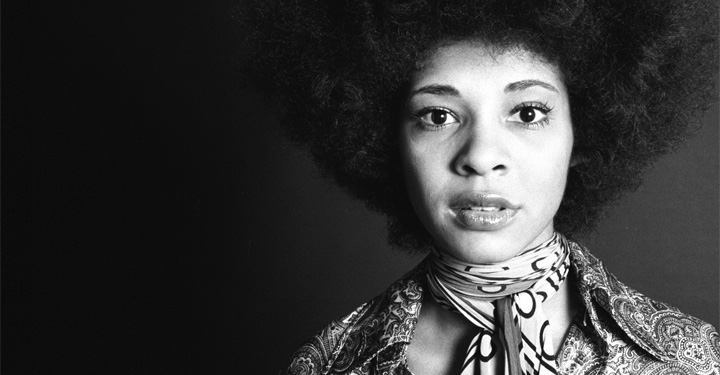
tuwa's-day
If ever there were a good reason for this site to lurch back from the dead for the gazillionth time, it would be the revitalization of my ongoing relationship with the admirable Tuwa and his Shanty. Tuwa drops by the Hut today to grace us with some knowledge and hot traxx from funk goddess Betty Davis. Show him some love in the comments section and who knows? Maybe we could even see more of him in the future.
Betty Davis -- If I'm In Luck I Might Get Picked Up
Betty Davis -- Shoo-B-Doop and Cop Him
Miles Davis divorced Betty because she was too wild. She's known for that and less for her music, which is a shame, and even less for her cooking, which is another. Between living in New York and living in Pittsburgh she used to have this restaurant in New Orleans, a hole-in-the-wall, dive-looking place that paid okay but cooked even better. It specialized in soul food: hush puppies, collard greens, fried chicken so greasy you couldn't lift the napkins off the table without help, you know the scene. That was where she worked after her first couple of records: they were some real hot stuff, sassy and in your face, hot like I said, hot like you'd expect today from Macy Gray or somebody but funky too like P-Funk and Sly Stone. Those were good albums but didn't get much attention, and Betty, she just figured hell with it and set up her restaurant. She did what she wanted to do and then she wanted to do something else. If you haven't heard 'em, well, I'll tell you something more about her cooking and that'll tell you about the music.
This restaurant started to get a reputation for itself, till one day this music critic from New York came in after one of the concerts--Irma Thomas and Allen Touissaint and Eddie Bo, that crew. Betty'd gone down and performed a couple of songs with them even though she didn't fit in too well, and then she came back to take the meatloaf and cornbread out of the oven even though I could have managed it just as well like on any other day. She seemed peevish about something, on edge, so I just ducked my head and tended to my tables. And the place was starting to fill up when this dandified critic walked in, cutting early from the concert, and ordered a reuben. Betty told me later he'd been standing there near the front row with his notebook out, and I guess that's what got under her skin. He didn't help things coming in later asking for a reuben.
"A reuben," she said.
"Yes, I think I'd like a reuben."
"You came into a soul food restaurant and ordered a reuben."
"Do you know how to make a reuben?"
By now Betty had her head back and one hand on her hip. "Do I know how to make a reuben? Hmph. Oh, you'll have your reuben." Then to me: "Jimmy, go get some some Swiss cheese and some rye bread." And back to the critic: "you want something to eat until then?"
So I went off to the grocery down the street and came back, and Betty buttered a plate and sliced the bread and took some corned beef she'd intended for a hot hash and she put it on one slice on some Swiss cheese, and put some Thousand Island on the other. And she put the two sides together and brought it out to the critic like that and set it across the table from him and he just looked at it.
"Not yet," she said. She was wearing this short tight skirt and a form-fitting blouse--she liked to advertise herself a bit, you know--and she had an afro in those days with some hoop earrings, and she sat at the counter catty-cornered from the critic and his sandwich, her elbows back on the counter with her legs crossed, one foot bobbing absently like she was still listening to Eddie Bo play an encore. She had her chin back a bit, her dander up, you know, and she turned her head slowly, giving that critic and his sandwich a look like you wouldn't believe. And the butter began to sizzle and the cheese began to melt and that poor fella had to loosen his tie. And shortly she took a spatula off the hanger and got up and flipped that sandwich, and when it was over she took the sandwich off one plate and put it on another and pushed it over to him and said, very sweetly, "careful, honey, this sandwich is still hot."
And he just said "yes'm" and mopped his brow with a handkerchief. When the sandwich was gone he had another glass of tea in a hurry, and left a good tip.
I guess he went off and wrote his article, but whatever it said, Betty didn't go back into the studio. Like I said, she did what she wanted and then she did something else. The food's long gone but at least we have the music still.
[Betty Davis @ amazon.com, or @ emusic.com]
[They Say I'm Different @ amazon, @ emusic.com]
[A non-fiction Betty Davis bio]
Labels: fiction, funk, rnb, Tuwa
Wednesday, June 06, 2007

glisten: son of tofu hut
Son of Tofu Hut is a collaboration with The King Open School of Cambridge, Massachusetts. King Open is a mix of races, ethnicities, social class and nationalities; a melting pot of opinions and perspectives. I've been sending discs of music to King Open to have them played to a class of seventh and eighth graders; the kids give them a listen once or twice and then write a brief critique of what they've heard. I'll be compiling their responses to present you with music, links (when available) and lightly edited (spelling and obvious typing errors are corrected, grammar and slang is not) teenagers' responses.
Jake Shimabukuro - 'Heartbeat / Dragon
John sez: In addition to being a grand virtuoso, Jake Shimabukuro is one of the nicest and most completely genuine people I've ever met. I've seen him play live three times now and he's absolutely floored me every time.
I was first exposed to Jake when I did a capsule review for his album, Dragon. I was struck by how much I wanted to listen to the man on the uke play solo and ditch the modern jazz production that mucked up his fascinating intricate fingering. You can imagine how overjoyed I was to discover that his readily available on the internet live shows generally consisted of Jake with an amplified uke and nothing but.
Gently Weeps, which Heartbeat/Dragon hails from, is an entirely acoustic album and, while it makes for an interesting listen, it simply can't compare to the exhilarating experience of seeing Jake live. If he ever comes to your town, don't miss him.
Student 1: Boring. The begining is too long and sounds like old fashioned chinese music. I dont like it. It is boring and... god, it is boring. Very asian-ish and very boring.
Student 2: The song sounds like some one is very sad. It makes me want to cry because it gets me into a really deep thinking point. I am happy this song has no singing in it because singers would mess up my train of thought. If i were really sad or was bored, I might actually listen to this song. I really like it. Wow, I can't believe this song is played on a ukulele, oh my god!!!!! But I still like this song.
Student 3: This sounds like a traditional Asian song. I would listen to it to relax. This guy is really talented. I like the sound of the heartbeat in the beginning.
VISIT
MYSPACE
LISTEN 2 A JAKE FULL-LENGTH LIVE SHOW
BUY 'Gently Weeps' direct from Jake
Student 4: The instrument in this song is lovely but it has too much of the same beat at the start. It's like a song that you would listen to if you wanted to cry because it sounds so sad.
Student 5: This sound like a person is going to a open mic stage to perform and that person is just bobbin' his head back and forth.
Student 6: At first it sounds like a heartbeat and then it sounds like an Asian beat, but then it gets more clear and has different kinds of beats to it. I think the beginning is just too long. Can't it just get to the singing part, like oh my god its wasting my time. Anyways it sounds kind of calming in one way then fun and move-y in another way. I like the different beats it has to it, like it's pulling one way then another. It seems like a song you would meditate to.
WATCH JAKE PLAY DRAGON LIVE
WATCH
WATCH MORE
Student 7: This song is very relaxing. I feel like I am in a life-sized zen garden. It sounds happy and remindes me of "A Princess Bride" (that movie is also great). It sounds as if fairies and elves are playing the harp (I know, that was cheesey, but it's true). The beginning of the song really does sound like a heartbeat. The ukulele is beautiful! I didn't know it could sound so relaxing!
Student 8: This song is very calming, something that you would listen to when you need to relax. I think that the maker of this song is trying to get you to come out of your shell and express yourself. It reminds me of rippling water.
Student 9: The beginning sounds like someone walking down a hall where they're not supposed to be at, maybe in a Chinese Garden. It's very repetitive and calming, but it's slow going. It needs some words. After awhile, it's getting boring and kind of giving me a headache. There are very few notes and then it goes into chords. I think this would be a nice song to go to bed to.
LISTEN 2 THE NPR INTERVIEW
LISTEN 2 MY INTERVIEW WITH JAKE
Student 10: VERY BORING. I NEED WORDS A.S.A.P. IT MAKES ME THINK OF WHY PEOPLE KILL THEMSELVES.
Student 11: I like the heartbeats in the beginning. The ukulele is nice and peaceful. It reminds me of some kind of Asian mixed with Western music. I like it, because it's not too happy and not too depressing. The music reminds me of music from this game on the web I played. It sounds like the kind of music used for foreign, graceful dances.
Student 12: I really like this song. At first it kind of sounds Asian, but then towards the middle it just sounds like cool acoustic "noodling", as some people call it. It makes me want to dance. It also makes me want to sing along, despite the fact that there are no words. It kind of reminds me of raindrops. At first it's light, but then towards the middle of the song/storm it gets heavy and frantic, but even with the frantic-ness, the song still sounds smooth. I wish I could play guitar like that. Kind of makes me think of that guy, I forget his name, but he was a gypsy and he only had two fingers but he was an amazing guitar player. It kind of sounds like that man mixed with Hawaii.
READ
READ MORE
JAKE PLAYS KAMAKA UKULELES
If you'd like to leave any questions or comments for me or for any of the students who are helping contribute to the Tofu Hut, feel free to do so in the comments section, but PLEASE keep the criticism constructive.
Labels: son of tofu hut


